Course Search

Course Search

Course Search

Aircraft Maintenance Engineering – BSc

  • CAO Points: NEW FOR 2027

  • Location: Shannon

  • years: 3


Course Overview

The BSc in Aircraft Maintenance Engineering is a three-year, full-time QQI Level 7 programme that combines a university degree with EASA Part-66 aircraft maintenance education, practical skills training and supervised industry experience.

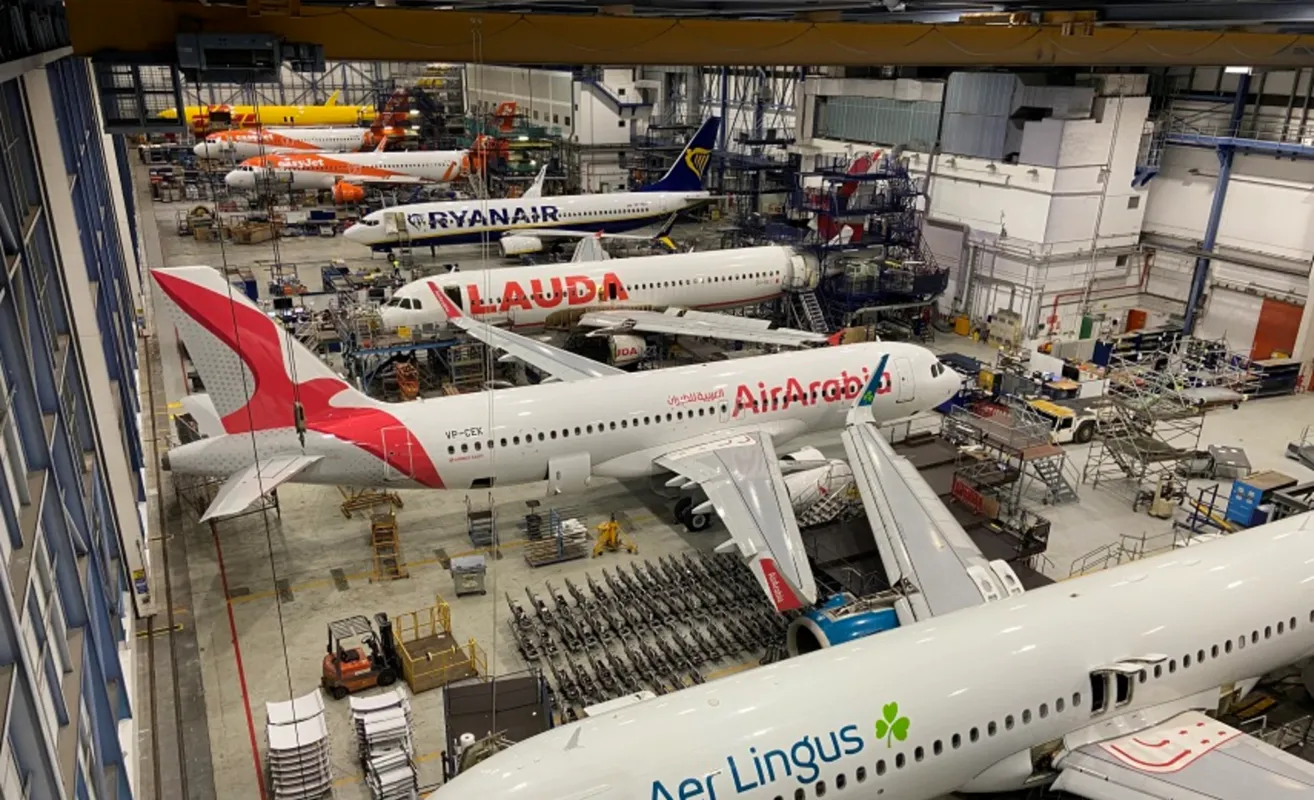
Students study the scientific and technical principles that underpin modern commercial aircraft, including aerodynamics, aircraft structures and systems, gas turbine engines, electrical and digital systems, maintenance practices, aviation legislation, human factors and safety. The theory is reinforced through mechanical, electrical and sheet-metal workshops, representative aircraft maintenance tasks and experience within a live commercial aircraft maintenance facility.

The programme develops not only technical knowledge, but also the practical competence, attention to detail, communication skills, professional discipline and safety-focused behaviours required in the aircraft maintenance industry.

This is a distinctive and unique offering within the Irish higher education sector. It brings together an academic degree, EASA aircraft maintenance training, practical workshop development and real experience within a large commercial aircraft maintenance organisation as one integrated programme.

It offers a complete ‘zero-to-hero’ pathway. A student can enter without previous aircraft maintenance experience and progress from first principles to EASA examinations, practical skills and supervised maintenance experience on real large commercial aircraft.

The programme is delivered by the award-winning Atlantic Aviation Group Training Academy, winner of both the Aviation Professional Training Award and the Aviation Academic Education Award at the 2024 Aviation Industry Awards.


Key Course Advantages

  • A QQI Level 7 Bachelor of Science degree awarded by TUS.
  • Training delivered within an EASA Part-147 approved Maintenance Training Organisation.
  • Integrated EASA Part-66 modules and examinations supporting the Category A1 licence pathway.
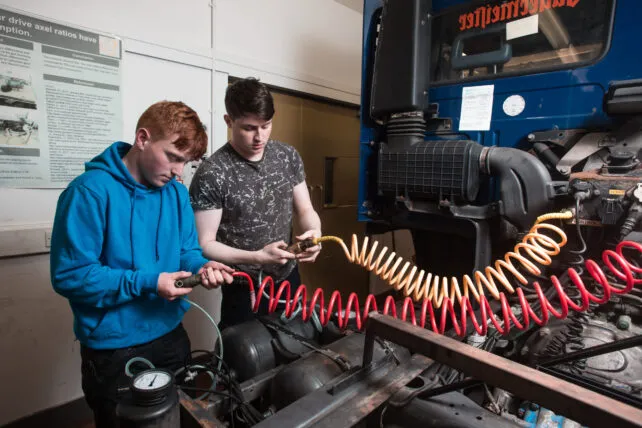
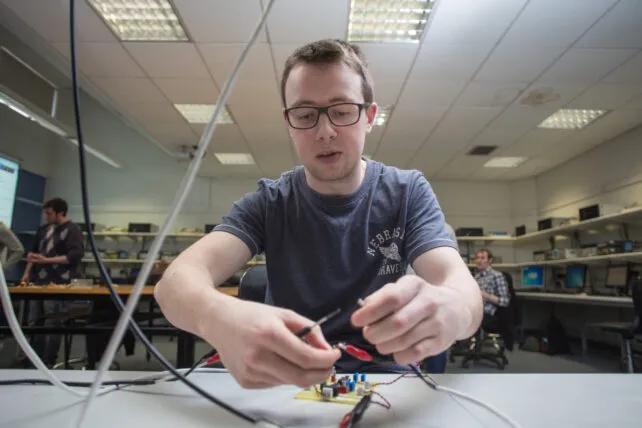
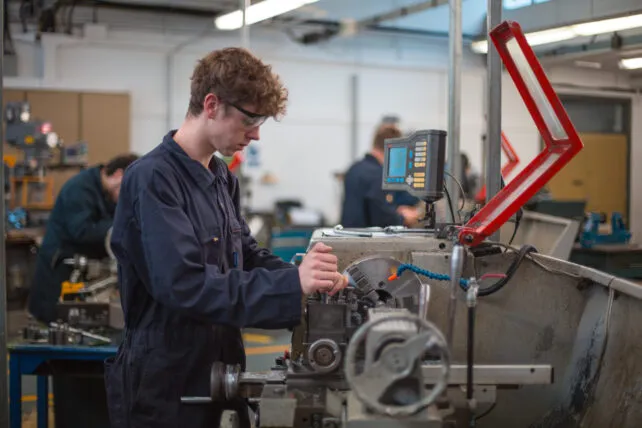
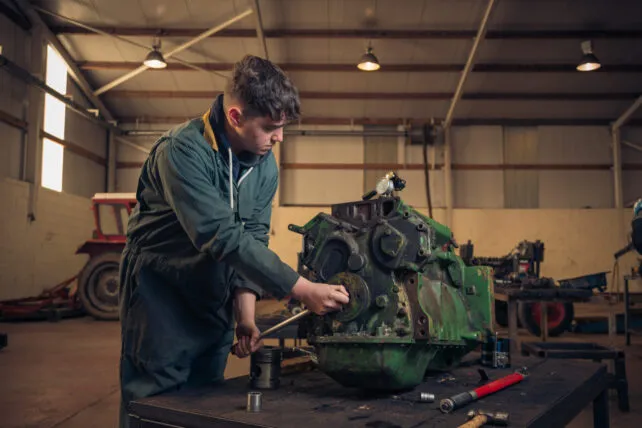
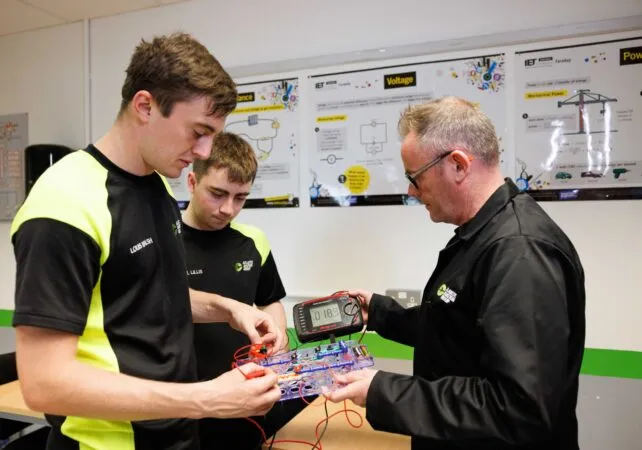
  • Practical mechanical, electrical and sheet-metal workshop training.
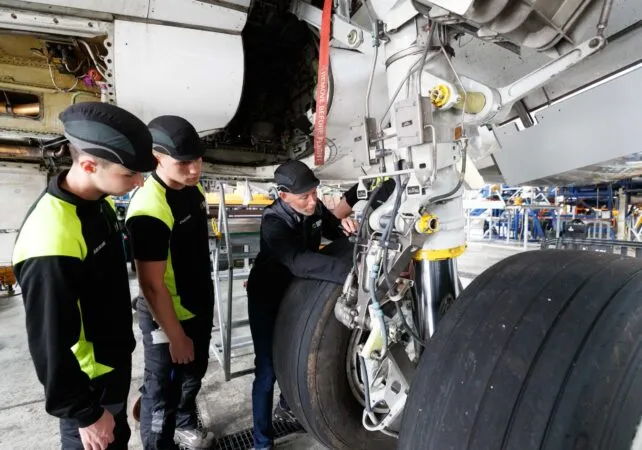
  • Supervised aircraft practical training and on-the-job experience.
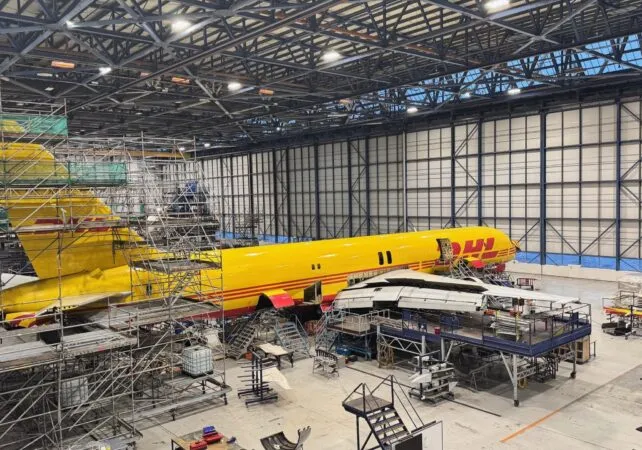
  • Real-world exposure to large commercial aircraft and an operational EASA Part-145 maintenance environment.
  • Teaching and mentoring by experienced aircraft maintenance and aviation professionals.
  • A strong foundation for future progression towards EASA Category B1.1 mechanical or Category B2 avionics licensing.
  • Development of the professional behaviours, quality standards and safety culture expected by the international aviation industry.

Contact Details

David Ward

Email: David.Ward@atlanticaviation.ie

Dr. Patrick Walsh

Email: Patrick.Walsh@tus.ie

Entry Requirements

Leaving Certificate

Applicants must satisfy the standard TUS entry requirements for a Level 7 degree and achieve a minimum grade of H5 or O4 in both Mathematics and English. Equivalent qualifications may be considered in accordance with TUS admissions procedures.

  • No previous aviation, engineering or aircraft maintenance experience is required.
  • An interest in aviation, engineering, practical problem-solving and understanding how complex systems work would be beneficial.
Mature Applicants

Candidates applying as mature applicants may be required to attend an interview and may be requested to take an aptitude test to prove their suitability for a place on this programme.

International Applicants

International applicants should apply directly to the International Office at TUS, allowing plenty of time for completing the visa process. Applications for September start should be made by 1st June at the latest to ensure visas are processed in time. You should familiarise yourself with visa processing times for your country of origin to ensure you make a timely application. Find out more here.

Course Modules

  • Mathematics

    Credits: 5

    Develops the arithmetic, algebra, geometry, trigonometry and graphical skills required in aircraft maintenance. Students learn to rearrange formulae, work with ratios and units, interpret graphs and complete practical engineering calculations.

  • Physics

    Credits: 5

    Introduces the physical principles that explain how aircraft and their systems operate. Topics include matter, mechanics, forces, motion, work, power, energy, fluid dynamics, heat, temperature, light, sound and wave motion.

  • Electrical Fundamentals

    Credits: 5

    Covers the principles of electricity used in aircraft systems, including electron theory, voltage, current, resistance, direct and alternating current, circuit calculations, capacitance, magnetism, induction, transformers, motors and generators.

  • Digital Techniques and Electronic Instrument Systems

    Credits: 5

    Introduces the digital technology used on modern aircraft. Students study number systems, logic circuits, data conversion, data buses, microprocessors, electronic displays, computer-based aircraft systems and the principles of electronic instrumentation.

  • Materials and Hardware

    Credits: 5

    Examines the materials and components used in aircraft construction and maintenance. Content includes ferrous and non-ferrous metals, composite materials, corrosion, heat treatment, fasteners, pipes, unions, springs, bearings, gears, cables and material inspection.

  • Maintenance Practices

    Credits: 5

    Develops the core knowledge and working practices required by an aircraft maintenance technician. Topics include workshop safety, tools and measuring equipment, engineering drawings, fits and clearances, electrical wiring, riveting, bonding, welding, aircraft handling, maintenance procedures, technical records and safe working practices.

  • Basic Aerodynamics

    Credits: 5

    Explains how airflow produces lift, drag, stability and control. Students study the atmosphere, aerodynamic terminology, aerofoil theory, the relationship between lift and drag, stall behaviour, flight stability and the fundamentals of high-speed flight.

  • Human Factors

    Credits: 5

    Explores how human performance influences aviation safety and maintenance quality. Topics include communication, teamwork, fatigue, stress, situational awareness, workplace conditions, human error, organisational factors and methods used to reduce maintenance mistakes.

  • Air Legislation

    Credits: 5

    Introduces the international and European regulatory framework governing aircraft maintenance. Students study the roles of EASA and the Irish Aviation Authority, aircraft certification and continuing airworthiness, together with the requirements of EASA Parts 66, 145 and 147.

  • Aircraft Systems

    Credits: 5

    Provides an integrated understanding of modern turbine-powered aeroplanes. It covers airframe structures, flight controls, landing gear, hydraulic and pneumatic power, fuel, electrical power, ice and rain protection, fire protection, environmental control, oxygen, water and waste systems, instrumentation and other major aircraft systems.

  • Gas Turbine Engines

    Credits: 5

    Covers the operating principles, construction and maintenance of aircraft gas turbine engines. Students examine intake systems, compressors, combustion chambers, turbines, exhausts, bearings and seals, lubrication, fuel and control systems, starting and ignition, engine indication, monitoring, auxiliary power units and engine installation.

  • Propellers

    Credits: 5

    Introduces propeller theory, construction, operation and maintenance. Content includes blade design, pitch control, constant-speed operation, governing and synchronisation, propeller ice protection, vibration, inspection, repair, storage and preservation.

  • Basic Metal Work

    Credits: 10

    Builds confidence in the safe and accurate use of engineering hand tools and measuring equipment. Students practise marking out, cutting, filing, drilling, reaming and threading, while working from technical drawings and specified tolerances.

  • Sheet Metal Work

    Credits: 10

    Introduces the materials, tools and processes used in aircraft sheet-metal construction and repair. Students complete practical exercises in measuring, layout, cutting, drilling, forming, bending, riveting and the production of representative aircraft joints and repairs.

  • Standard Practices Mechanical (ATA 20)

    Credits: 10

    Develops the mechanical standard practices used throughout aircraft maintenance. Training includes torque procedures, locking devices, fasteners, bearings, seals, pipes, hoses, control cables and rods, precision measurement and the correct use of aircraft maintenance manuals.

  • Standard Practices Electrical (ATA 20)

    Credits: 5

    Develops the practical skills needed to inspect, test, assemble and repair aircraft electrical wiring. Students work with aircraft wires, terminals, connectors, crimping tools, continuity and insulation testing, wiring diagrams and approved electrical repair procedures.

  • On-the-Job Experience Part 1

    Credits: 15

    Provides supervised, structured experience across a range of maintenance activities within an operational EASA Part-145 organisation. Students work alongside qualified personnel on large commercial aircraft, complete and record relevant tasks, use approved data and develop the safety, quality, communication and professional standards expected in the workplace.

  • Mandatory Skills Development

    Credits: 10

    Mandatory Skills Development includes CDCCL, manual handling, inspection techniques, company procedures training, wing-harness/fall-arrest training, and Airbus A320 familiarisation.

  • On-the-Job Experience Part 2

    Credits: 45

    Provides supervised, structured experience across a range of maintenance activities within an operational EASA Part-145 organisation. Students work alongside qualified personnel on large commercial aircraft, complete and record relevant tasks, use approved data and develop the safety, quality, communication and professional standards expected in the workplace.

  • Aircraft Practical Training

    Credits: 15

    Applies classroom and workshop knowledge to representative aircraft maintenance activities. Students use common tools and equipment, disassemble and reassemble aircraft components and participate in assessed maintenance tasks relevant to the EASA Part-66 modules on aircraft undergoing aircraft maintenance in a live maintenance environment.

  • Mandatory Skills Development

    • CDCCL/Fuel Tank Safety Continuation Training
    • Human Factors Continuation Training
    • EWIS Continuation Training

    These continuation-training elements and do not carry separate credits.

What can you do after this course?

Graduates will be prepared for entry-level employment in aircraft maintenance and for longer-term progression across the international aviation sector. The combination of a degree, EASA education, practical skills and industry experience provides a strong foundation for both technical and professional development.

  • Potential career areas
  • Aircraft Maintenance Engineer
  • Commercial aircraft base maintenance
  • Airline line maintenance
  • Continuing Airworthiness Management Organisations
  • Technical services and engineering support
  • Aircraft leasing, technical records and asset management support
  • Maintenance planning and production support
  • Aviation training
  • Maintenance supervision and management following further industry experience

Graduates may complete the remaining examinations and experience required to progress towards an EASA Category B1.1 mechanical or Category B2 avionics licence. They may also apply for admission to an appropriate Level 8 programme, subject to the entry requirements and Recognition of Prior Learning procedures of the receiving institution.

  • A QQI Level 7 BSc in Aircraft Maintenance Engineering from TUS.
  • An EASA Part-147 Certificate of Recognition, subject to successful completion of the approved course requirements.
  • A pathway to apply to the Irish Aviation Authority for an EASA Category A1 Aircraft Maintenance Licence, subject to satisfying all applicable regulatory requirements.
  • A substantial foundation towards the examinations required for progression to an EASA Category B1.1 mechanical or Category B2 avionics licence.

Additional Information

Similar Courses

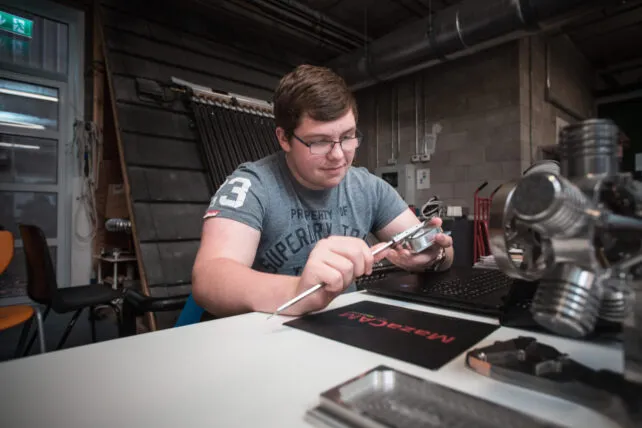
TUS Limerick Automotive Engineering and Transport Management Students

Course Type: Undergraduate

Automotive Engineering and Transport Management – BEng (Hons)

Study Mode: Full Time

Level 8

Years 4

CAO points 302

Course Code US915

Civil Engineering Management

Course Type: Undergraduate

Civil Engineering Management – BSc (Hons)

Study Mode: Full Time

Level 8

Years 4

CAO points 339

Course Code US886

TUS Limerick Electrical Engineering Students

Course Type: Undergraduate

Electrical Engineering – BEng (Hons)

Study Mode: Full Time

Level 8

Years 4

CAO points 358

Course Code US900

TUS Limerick Electronic Engineering with Computer Systems Student

Course Type: Undergraduate

Electronic Engineering with Computer Systems – BEng (Hons)

Study Mode: Full Time

Level 8

Years 4

CAO points 351

Course Code US903

TUS Limerick Mechanical Engineering Students

Course Type: Undergraduate

Engineering (Common Entry) – BEng (Hons)

Study Mode: Full Time

Level 8

Years 1

CAO points 372

Course Code US904

TUS Limerick Engineering Technology Management Students

Course Type: Undergraduate

Engineering Technology Management – BEng (Hons)

Study Mode: Full Time

Level 8

Years 4

CAO points 309

Course Code US909

TUS Limerick Mechanical Engineering Students

Course Type: Undergraduate

Mechanical Engineering – BEng (Hons) (Limerick)

Study Mode: Full Time

Level 8

Years 4

CAO points 339

Course Code US911

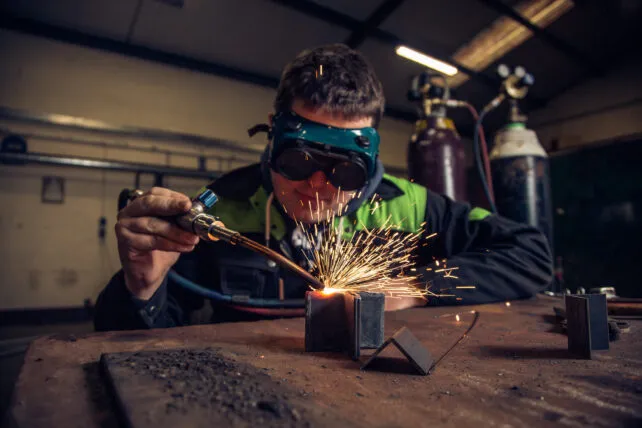
TUS Limerick Precision Engineering Student

Course Type: Undergraduate

Precision Engineering – BEng (Hons)

Study Mode: Full Time

Level 8

Years 4

CAO points 266

Course Code US914

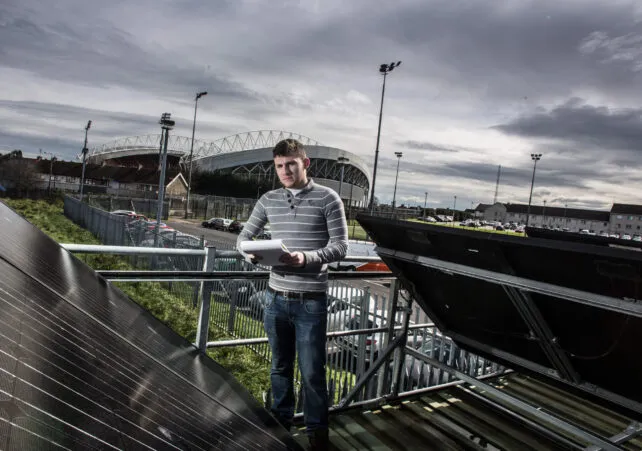
TUS Limerick Renewable and Electrical Energy Engineering

Course Type: Undergraduate

Renewable and Electrical Energy Engineering – BEng (Hons)

Study Mode: Full Time

Level 8

Years 4

CAO points 341

Course Code US901

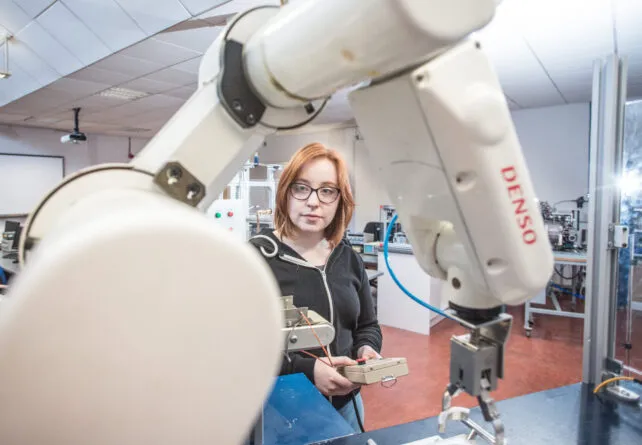
TUS Limerick Robotics and Automation Engineering Students

Course Type: Undergraduate

Robotics and Automation Engineering – BEng (Hons)

Study Mode: Full Time

Level 8

Years 4

CAO points 390

Course Code US902

TUS Limerick Agricultural Engineering Student

Course Type: Undergraduate

Agricultural Engineering – BEng

Study Mode: Full Time

Level 7

Years 3

CAO points 272

Course Code US769

TUS Agricultural Mechanisation Student

Course Type: Undergraduate

Agricultural Mechanisation – Higher Certificate in Engineering

Study Mode: Full Time

Level 6

Years 2

CAO points 226

Course Code US651