Courses
Admissions & Support

Course Search
Courses
Admissions & Support
Course Search
Our Services
Our Community
Course Search
Governance
Professional Services

Location: Moylish, Limerick City
years: 2
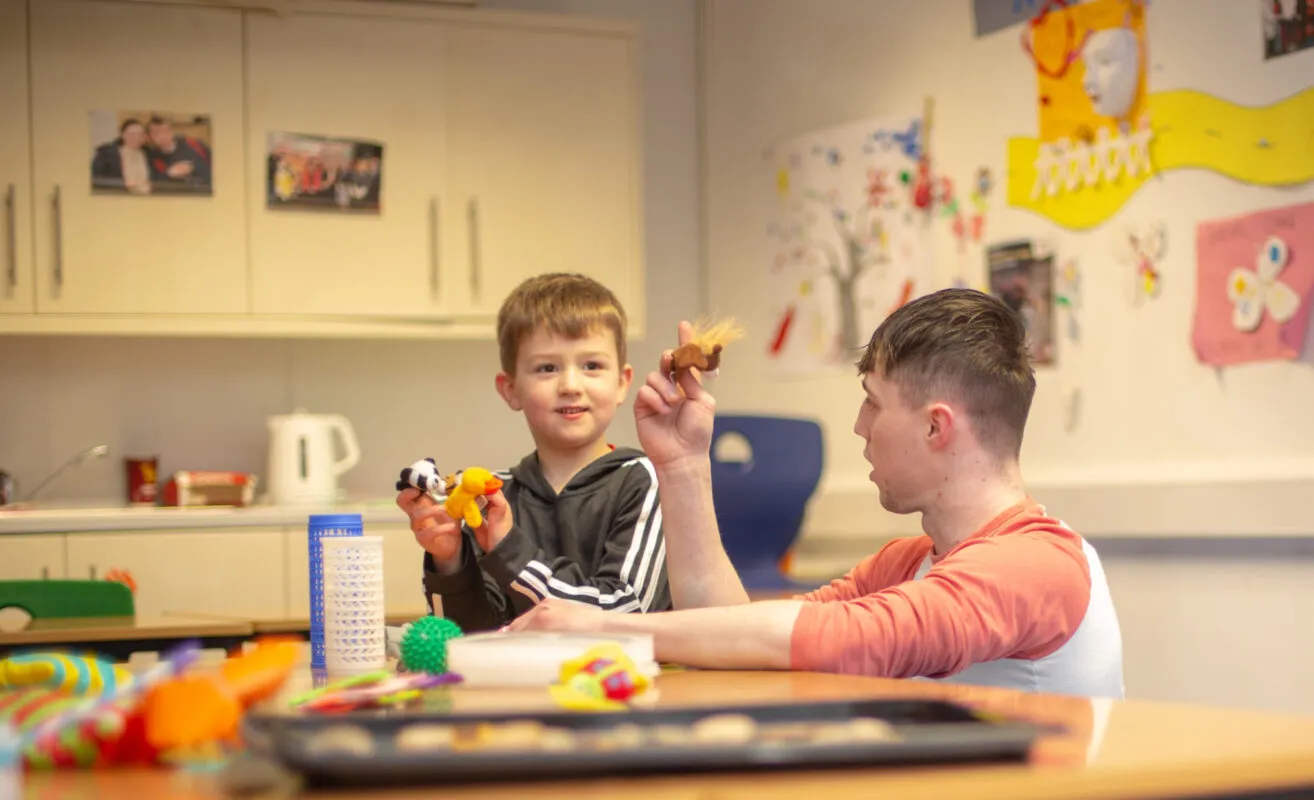
Throughout the course, students will explore the exciting and dynamic content and practice, giving you the knowledge and skills to be a formidable candidate for any career path you may choose to pursue in the area. Early childhood education and care (ECEC) reflects a holistic view of the education. You will have the opportunity to study modules such as Child Health and Wellbeing, Play, STEAM, Curriculum, Leadership and Management and School Age Childcare. This course is designed to equip graduates with the essential core knowledge practices and values to fulfil the role of professional Early Childhood Educator.
An inter-disciplinary approach is a must in when working in a busy quality inclusive early years education environment and this course will prepare you for this through modules such as problem based learning and current concepts. Furthermore, the course design and content have guided by the sector’s policy and regulatory frameworks, such as Aistear, Siolta, Quality and Regulatory Framework (QRF) First 5 and professional Award Criteria and Guidelines. It is innovating practice led course where students learn how to combine theory and practice. An active learning environment is achieved through lectures, seminars, workshops and enquiry- based learning with children’s learning materials.
The Early Childhood Programme course on the TUS Moylish campus have a strong network of international education and industry partners, and as a result students can engage in student exchanges, work placements or internships to countries such as Canada and Europe. Students will complete 400-hour practice placements in year 2 and 3 (should you progress to the Level 7 programme) in early years education and care or other relevant organisations working with children. Professional Practice Placement gives you the opportunity to develop the hands-on skills required to be an excellent Early Years Educator as you progress through each year of the programme.
Professional Accreditation
In 2022 this degree completed programmic review and continues to be officially recognised as meeting the Professional Award Criteria and Guidelines for Initial Professional Education (Level 7 and Level 8) Degree Programmes for the Early Learning and Care Sector in Ireland. TUS is currently list under the QAB Approved List of courses.
Business and Humanities Faculty Office
Email: BusinessandHumanities@tus.ie
A minimum of 5 O6/H7 grades in five Leaving Certificate subjects, including Mathematics and English or Irish.
QQI FET/FETAC
TUS accepts QQI-FET/FETAC awards for entry on all courses of study. Please refer to our Admissions information for details.
Candidates applying as mature applicants may be required to attend an interview and may be requested to take an aptitude test to prove their suitability for a place on this programme.
International applicants should apply directly to the International Office at TUS, allowing plenty of time for completing the visa process. Applications for September start should be made by 1st June at the latest to ensure visas are processed in time. You should familiarise yourself with visa processing times for your country of origin to ensure you make a timely application. Find out more here.
ECEC Frameworks
Credits: 5
This module introduces curriculum theory for early childhood education, emphasising learner‑centred, inclusive, experiential curricula and process quality in professional practice. It focuses on exploring current curriculum models and critically comparing the Irish national frameworks Aistear and Síolta in terms of their principles, structure, content and potential to support quality experiences for young children.
Introduction to Play
Credits: 5
This module examines the central role of play in early childhood education, highlighting how children learn through play and hands-on experiences. It develops students’ understanding of play types, characteristics and children as active learners, and supports them to reflect on their attitudes and apply effective pedagogical strategies in their early years practice.
Learning through Physical Activity
Credits: 5
The purpose of this module is to examine the role of physical activity and movement in the overall development of young people, with the intention of promoting physical activity in the early years. It equips the student with the competencies, knowledge and skills required for planning, implementing and evaluating physical activity and movement opportunities for children during the early years.
Introduction to the Sociology of Childhood
Credits: 5
This module introduces the Sociology of Childhood as a lens to critically examine childhood as a social construction, highlighting how ideas of childhood vary across time, place and culture and how children both shape and are shaped by their social worlds. It engages learners with key theories, debates and substantive issues (such as childhood and criminality, consumption, risk, work and family), encouraging them to analyse dominant and alternative understandings of childhood and consider their implications for practice.
Language Development in the Early Years
Credits: 5
This module is designed to introduce students to the process of speech & development in early years. The pattern and stages of language development ( including, phonological, morphological, syntactic, semantic and pragmatic language development). The role of the adult and the interactional strategies encompassed in early years practice will also be considered in relation to promoting the language learning opportunities for young children. Areas such as speech, language and communication needs (SLCN) in the early years, bilingualism and multilingualism in the early years will also form part of this module delivery.
Child Care Health and Wellbeing
Credits: 5
This module develops learners’ understanding of childcare and wellbeing in contemporary society, with an emphasis on holistic, multicultural perspectives and the lifelong impact of lifestyle choices on children’s health. It examines the role of multiple agencies in promoting health and wellbeing and builds students’ awareness of child health and care needs, including paediatrics, childhood illnesses, developmental milestones and relevant policies and procedures.
Psychology of Child Development 1
Credits: 5
This module introduces key theories and concepts in the psychology of child development from birth to six years, framed within a holistic view of physical, cognitive, social and emotional growth. It examines the roles of play and attachment in early development, helping students understand how these processes support young children’s overall development.
Foundations of Teaching and Learning
Credits: 5
This module examines the educator’s pedagogical role in supporting young children’s learning through play and exploration, with a particular focus on recognising and responding to schematic play as ‘patterns of repeatable behaviour’. It develops students’ skills in observing, assessing and planning for children’s schema-based learning, while also enhancing their academic skills through engagement with multimedia resources.
Professional Practice and Preparation 1
Credits: 5
This module enhances students’ self-awareness of their values and beliefs to foster professionalism as early years educators preparing for Practice Education Placement (1). It covers key areas of child development (birth to six years), the educator’s supportive role, observation methods for assessing learning, ethical practice, safeguarding, and practical placement preparation including CVs and Garda vetting.
Learning through Art and Music
Credits: 10
This module introduces students to creative arts elements—visual arts, music, drama, and dance—through experiential, process-led workshops guided by Aistear and Síolta regulations. It explores developmentally appropriate arts learning to foster children’s cognitive, social, emotional growth and critical thinking, emphasising the educator’s role as a facilitator of creative play provocations.
Outdoor Learning
Credits: 5
This module promotes awareness of outdoor learning environments as key resources for young children’s wellbeing, physical activity, literacy and social-emotional growth through natural interactions. It explores relevant theories like Forest School, alongside opportunities to assess risk and resilience in outdoor play and learning.
Professional Practice Education Placement 1 (15 weeks/400 hours)
Credits: 30
This module enables students to integrate theory and practice through supervised placements in Early Childhood Education and Care settings, working supernumerarily with children under six to link theoretical frameworks to real-world facilitation of learning and development. It fosters critical reflection, competency development and identification of preferred practice areas under experienced professional guidance.
STEAM in ECE
Credits: 5
This module equips early childhood education students with knowledge and skills to deliver authentic STEAM (Science, Technology, Engineering, Arts, Mathematics) experiences for preschoolers through play, exploration, and inquiry-based activities initiated by children or educators. It emphasises the educator’s pivotal role, enhances pedagogical content knowledge via practical experimentation and evaluation, boosts digital literacy with relevant technologies, and links directly to Aistear themes, aims, goals and Síolta principles and standards.
Learning through Drama & Story Telling
Credits: 5
This module explores drama, literature, storytelling, and puppetry as tools for fostering child development and creativity through play in early childhood settings. It connects these techniques to key theorists (Piaget, Montessori, Vygotsky, Froebel), encourages collaborative material development, and involves practical peer-led sessions to build students’ skills.
Creating Inclusive Environments
Credits: 5
This module introduces inclusive practices in early years education, tracing the historical and policy shift from exclusion to inclusion while encouraging reflective examination of personal values, beliefs and potential biases. It covers ‘additional needs’ arising from disability, family background, ethnicity or health, alongside strategies for inclusive environments and curricula, with strong emphasis on parent partnerships for equitable diversity support.
Transitions in the Early Years
Credits: 5
This module explores how young children’s early transitional experiences, emphasised as supportive and smooth in Aistear and Síolta (2009), impact their wellbeing. It supports students to reflect on their role as pedagogical leaders in planning high-quality environments for positive transitions and to examine how these are embedded in early years policy and practice.
School Age provision
Credits: 5
This module outlines the role of school-age childcare (ages 6-14) within the Irish context, highlighting its overlap with early childhood care skills and knowledge. It focuses on relevant policies and practices to create inviting, inclusive, and participative play spaces tailored to older children.
Health Nutrition and Wellbeing
Credits: 5
This module deepens students’ knowledge of optimal nutrition for young children’s holistic development, exploring factors influencing adequate diets, current issues like obesity, and conditions supporting flourishing at home and in settings. It examines health and wellbeing concepts, the impacts of ill health or disability, policy implications (including post-Covid challenges), the early years educator’s role in health promotion and child protection, and relevant services for families.
Graduates can avail of various employment opportunities, such as a variety of roles within Early Years Education and Care and School Age organisations .e.g. Pre- school , full day services.
Students can work in both the public private community and voluntary sectors. Many of past graduates have are working with organisations such as Barnardo’s , Special Needs Assistants within a Primary and special schools, AIM (Access and Inclusion staff in Early Years Education and Care settings).
Students can progress to working as Manager or potentially own and develop their own business.
Other roles that may be of interest -Development Officer in Childcare Committees, Inspectors with TUSLA and Department of Education and Skills, Early Years Specialists with Better Start.
Upon completion of this course students will be able to progress on to the Level 7 BA (Hons) Early Childhood Education and Care degree, subject to availability of places.
Check out our other Direct Entry courses here
Explore our courses