
Course Search

Course Search

Course Search

Electrical Engineering – BEng (Hons)

  • CAO Points: 348

  • Location: Moylish, Limerick City

  • years: 4


Course Overview

Electrical engineering is a diverse and challenging profession concerned with the design, development and control of electrical energy and equipment upon which our technological society so largely depends. Electrical engineers utilize their knowledge of devices and systems design in a multitude of areas. These include generation, transmission, distribution,control and usage of electrical energy in a safe, economic and sustainable way.

TUS’s Electrical Engineering degree is a nationally accredited and internationally recognised programme that provides a comprehensive study of electrical principles, practices and applications. This programme will provide graduates with the key skills necessary to perform roles in several industry disciplines, including power systems operation and protection, maintenance and commissioning of control and automation systems. It develops advanced knowledge in the areas of Electrical Power Systems and Power Quality and Advanced Control and Automation Systems.

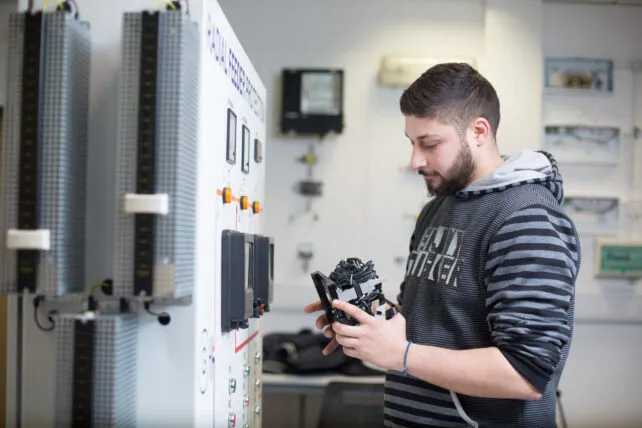
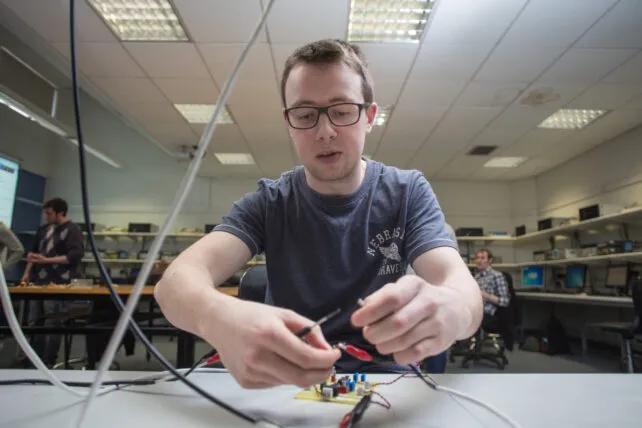
This programme includes practical and project-based learning in well-equiped modern laboratories in a broad-based curriculum with strong practical content. It allows students to work in industry with placement on Year 3 of the programme. It introduces them to key relevant technologies and the knowledge necessary for employment in the electricaland automation sectors. The department maintains close links with local industries and consequently many of our graduates are offered employment even before graduation.

Contact Details

Department of Electrical and Electronic Engineering

Email: Electrical.midwest@tus.ie

What are the entry requirements?

Leaving Certificate

A minimum of 2 H5 & 4 O6/H7 grades in six Leaving Certificate subjects, including English or Irish and a minimum of an O4 in Mathematics.

Mature Applicants

Candidates applying as mature applicants may be required to attend an interview and may be requested to take an aptitude test to prove their suitability for a place on this programme.

International Applicants

International applicants should apply directly to the International Office at TUS, allowing plenty of time for completing the visa process. Applications for September start should be made by 1st June at the latest to ensure visas are processed in time. You should familiarise yourself with visa processing times for your country of origin to ensure you make a timely application. Find out more here.


Course Modules

  • Electrical Installation 1

    Credits: 10

    The module aims to provide the learner with the opportunity to learn, practice and develop the basic skills to complete a domestic installation, to familiarise them with the terminology, tools, materials, equipment and working practises which will form the foundation for their further development and progression.

  • Electrical Technology 1

    Credits: 10

    To introduce the learner to basic electric circuits and electrical devices.

  • Electrical Theory for Installation

    Credits: 5

    This module is designed to introduce students to the concepts of electrical power systems in a range of applications and there by develop an understanding of the relationship between supply, power, cables, protection and safety. This is linked to the Electrical Installation module.

  • Engineering Mathematics 1

    Credits: 10

    This module provides a foundation in mathematical principles: arithmetic, algebra, trigonometry, complex numbers, elementary calculus and statistics. The theory is kept to a minimum, with problem-solving used extensively to establish and exemplify the theory. The material will provide engineering applications; the learner will be able to apply standard mathematical techniques to analyse and solve electrical, electronic and related engineering problems.

  • Engineering Science

    Credits: 5

    The aim of the module is to introduce students to a broad knowledge of fundamental Principles and Practical applications in Engineering Science neccessary to support other core modules. The module provides a comprehesive grounding in fundamental Engineering that is relevent to multiple Engineering courses in the department.

  • Engineering Professional Development 1

    Credits: 5

    To provide the learner with an opportunity to develop valuable transferable personal and professional skills. Utilising an active learning strategy, the learners will develop their knowledge and skills in a range of areas such as professional engineering standards and ethics, project management, problem solving, team working and communications. The student will apply these skills to a series of mini projects.

  • Energy Transition Introduction

    Credits: 10

    To meet climate change commitments the global energy sector must transition from the current fossil fuel-based system to a zero-carbon system by the 2050. Decarbonizing the energy sector will require massive changes to and investment in all aspect of energy supply and use. This module will introduce learners to basic energy concepts, give an overview of existing fossil fuel energy supply and use systems and their impacts and outline alternative energy systems for each of the main energy sectors.

  • Industrial Control Fundamentals

    Credits: 5

    To provide the learner with the basic concepts of industrial control systems. It develops the knowledge and skills required to integrate discrete I/O with a programmable logic controller (PLC).

  • Electrical Principles 2 (Year long)

    Credits: 10

    To build on the material covered in Electrical Principles 1, including 3-Phase Systems, Magnetics, Transformers, Motors and Generation with greater emphasis on practical applications.

  • Electrical & Instrumentation Drawing (Year long)

    Credits: 5

    The aim of this module is to provide the learner with the knowledge to understand and design Electrical and Instrumentation drawings.

  • Equipment Control Systems (Year long)

    Credits: 10

    This module is designed to introduce students to the concepts of industrial electrical control systems in a range of applications and there by develop an understanding and application of the concepts.

  • Engineering Professional Development 2 (Year long)

    Credits: 5

    To provide the learner with an opportunity to develop valuable transferable personal and professional engineering skills. Utilising an active learning strategy, the learners will build their employability skills in a range of areas starting with developing a Personal Development Plan (PDP), followed by learning a series of project management tools and techniques with a heavy emphasis on team working and collaborative working. The student will apply the skills learned in a group project that has a direct link to at least one other module in their degree programme.

  • Engineering Mathematics 2 (Year long)

    Credits: 10

    The aim of this module is to provide the learner with broad competencies in engineering mathematics and statistics. At the end of this module the learner will be able to use differentiation, integration, differential equations, linear algebra, descriptive statistics, probability theory and reliability analysis to model, analyse and solve engineering problems.

  • Cisco Ip Networking (Semester 1)

    Credits: 5

    This module will give the learner an introduction to Cisco IP networking providing the knowledge and skills required to build and configure a small network and examine its principle technologies and standards.

  • Industrial Installation (Semester 1)

    Credits: 5

    The module aims to provide the learner with a broad knowledge of hardwired based industrial control systems.

  • Electrical Planning And Design (Semester 2)

    Credits: 5

    The aim of this module is to provide the learner with a specialised knowledge of the safe design techniques, software tools and approaches to the safe planning of a commercial and industrial electrical installation.

  • Control Installation (Semester 2)

    Credits: 5

    The module aims to provide the learner with a broad knowledge of PLC based industrial control systems.

  • Electrical Machines & Power Distribution

    Credits: 10

    The aim of the module is to provide the learner with specialised knowledge of high, medium and low voltage electrical integration and distribution of electrical equipment, plant and AC machines.

  • Process Instrumentation & Calibration

    Credits: 5

    The aim of this module is to provide learners with detailed knowledge of industrial process instrumentation, calibration and control which includes the concepts, engineering and installation of control and measurement equipment.

  • Advanced Plcs, Hmi & Scada

    Credits: 10

    To provide the learner with a specialised knowledge of advanced automation systems, structured programming approaches and distributed control applications. Also the learner will acquire the skills needed to successfully design, develop and integrate a SCADA solution.

  • Mathematics For Electrical Engineers

    Credits: 10

    To provide the learner with the necessary mathematical background to model, analyse and solve problems in engineering.

  • Electrical Testing And Faultfinding

    Credits: 5

    The aim of the module is to provide the learner with an in‑depth knowledge of safe electrical testing and fault finding techniques within an industrial production and electrical distribution environments.

  • Energy Storage & Analysis

    Credits: 5

    The aim of this module is to develop students’ knowledge and understanding of the operation and characteristics of energy storage technologies, and to equip students with analytical skills necessary to advise on their appropriate use to enhance integration of renewable energy resources.

  • Industrial Electrical Maintenance (Electives)

    Credits: 5

    This module aims to provide the learner with a broad knowledge of modern industrial maintenance strategies and an efficiency management approach to industrial electrical engineering. This module will provide the learner knowledge of selection criteria, commissioning requirements, regulations, predictive and preventive maintenance, reliability, diagnostic testing, inspection and cost to ensure the maintenance required to minimise a company’s operating cost and maximise their efficiency, reliability and longevity of electrical assets.

  • Mv Network Operations & Switching (Elecitve)

    Credits: 5

    This module will present and discuss the main infrastructure, concepts, operation, maintenance and future developments of networks and grids. The module will provide a detailed analysis of the technical aspects of transformation, stations, switching, network connections and protection. Relevant communications methods, relay interrogation, automation and the safe operation of the high & medium voltage network through normal & fault conditions will be investigated. At the end of this module, it is expected that student will have an understanding of the required protection criteria and elements required in order to provide the delivery of a safe network to all connected customers. This module will also introduce the student to the configuration of the 20kV system as utilised by ESB Networks and Plant distribution. Students will be able to prepare a comprehensive operational switching plan to disconnect / isolate a section of MV network, whilst maintaining a quality and safe supply to all unaffected customers.

  • Work Placement

    Credits: 10

    This placement module will provide students with an opportunity to apply the theoretical and practical knowledge gained on their respective programmes while working in a professional engineering environment. It will also afford them
    the opportunity to gain valuable career experience and develop their understanding of working in such industry environments.

  • Final Year Project (Year long)

    Credits: 10

    The aim of this module is to develop a learners independent ability to research a topic, complete a technical project and produce a dissertation in accordance with pre-determined formats and standards. The topic selected must be directly relevant to the course of study being undertaken by the learner.

  • Electrical Power Systems

    Credits: 5

    The module provides an understanding of the concept of Electrical Power Systems. It provides the high level numerical analysis within Electrical Power Systems. The module develops the student’s ability to design, manage and validate Electrical Power Systems. This analysis includes power flow, system stability and voltage frequency & reactive power control in Electrical Power Systems.

  • Advanced Automation Design

    Credits: 5

    The aim of this module is to provide the learner with the knowledge to design and implement control solutions for interfacing with SCADA and Batch solutions. The ability to design and structure PLC programming for using Control Module libraries.

  • Statistical Process Control

    Credits: 5

    To give the learner broad competencies in statistical analysis and to demonstrate the role of statistics and related techniques in Quality systems. At the end of the course, students should be competent in the theoretical background and
    the application of statistical tools in SPC.

  • Advanced Ip Networking

    Credits: 5

    This module will give the learner skills related to implementing and debugging an IP network including LAN switching technologies, routing technologies and infrastructure services.

  • Renewable System Integration (Elective)

    Credits: 5

    Understand the barriers and challenges to the integration of renewable generation into the national grid.

  • Energy Management (Elective)

    Credits: 5

    To provide the learner with a detailed understanding of how energy use should be monitored, analysed and managed with the appropriate strategies and how energy projects may be managed to achieve measurable improvements in energy performance.

  • Robotics And Vision Inspection (Elective)

    Credits: 5

    To provide a knowledge of different industrial robot configurations, specifications and models, including kinematic analysis of robot manipulators. To provide a knowledge of the hardware, optics and software components of vision inspection systems. To familiarize learners with industry standard tools and techniques and so underline the growing importance and relevance of automated inspection in industry and its limitations. To give learners the necessary knowledge and skills to specify and/or implement both robotic and industrial inspection systems and see potential application methods for their integration.

  • Electrical Protection Systems

    Credits: 5

    This module develops a thorough understanding of protection and switchgear requirements for the electrical power system. It includes the design, selection and erection of switchgear and protection systems assemblies.

  • Advanced Scada And Industrial Networks

    Credits: 5

    This module will provide the learner with the knowledge to design and implement SCADA solutions for advanced automated solutions. The knowledge acquired from the various Industrial Networks configuration will provide information in the overall design of the automated solution.

  • Applied Statistical Analysis

    Credits: 5

    At the end of this course students should have the theoretical background and be competent in the application of inferential statistics and statistical methods used in the analysis of data from designed experiments.

  • Electrical Power Quality & Reliability

    Credits: 5

    To give the learner an understanding of the causes of power quality issues and problems. Learn how to prevent them and provide greater power sytem reliability.

  • Computer System Validation (Elective)

    Credits: 5

    An overview of engineering approaches to validating computerized systems within a regulated industrial environment with an emphasis on the full validation lifecycle.

  • Engineering Management (Elective)

    Credits: 5

    This module is designed to give the student insight into the tools and techniques associated with engineering project and contract management. The student will gain a better understanding of contract and project engineering along with how to best manage such projects and contracts along with the associated multidisciplinary teams.

What can you do after this programme?

Graduates of this programme have worked in positions such as:

  • Electrical Engineer
  • Advanced Control/Automation Systems
  • Energy Management
  • Electrical Power Systems
  • Power Quality
  • Robotics Engineer

Successful graduates of this programme are eligible for Level 9 and 10 postgraduate programmes within TUS or elsewhere.

Additional Information

Similar Courses

TUS Limerick Electrical Engineering Students

Course Type: Undergraduate

Electrical Engineering – BEng

Study Mode: Full Time

Level 7

Years 3

CAO points 250

Course Code US750

TUS Limerick Electronic Engineering with Computer Systems Student

Course Type: Undergraduate

Electronic Engineering with Computer Systems – BEng (Hons)

Study Mode: Full Time

Level 8

Years 4

CAO points 279

Course Code US903

TUS Limerick Renewable and Electrical Energy Engineering

Course Type: Undergraduate

Renewable and Electrical Energy Engineering – BEng (Hons)

Study Mode: Full Time

Level 8

Years 4

CAO points 336

Course Code US901

TUS Limerick Robotics and Automation Engineering Students

Course Type: Undergraduate

Robotics and Automation Engineering – BEng (Hons)

Study Mode: Full Time

Level 8

Years 4

CAO points 301

Course Code US902