

Course Search

Course Search

Course Search

PhD Digitalisation Engineering

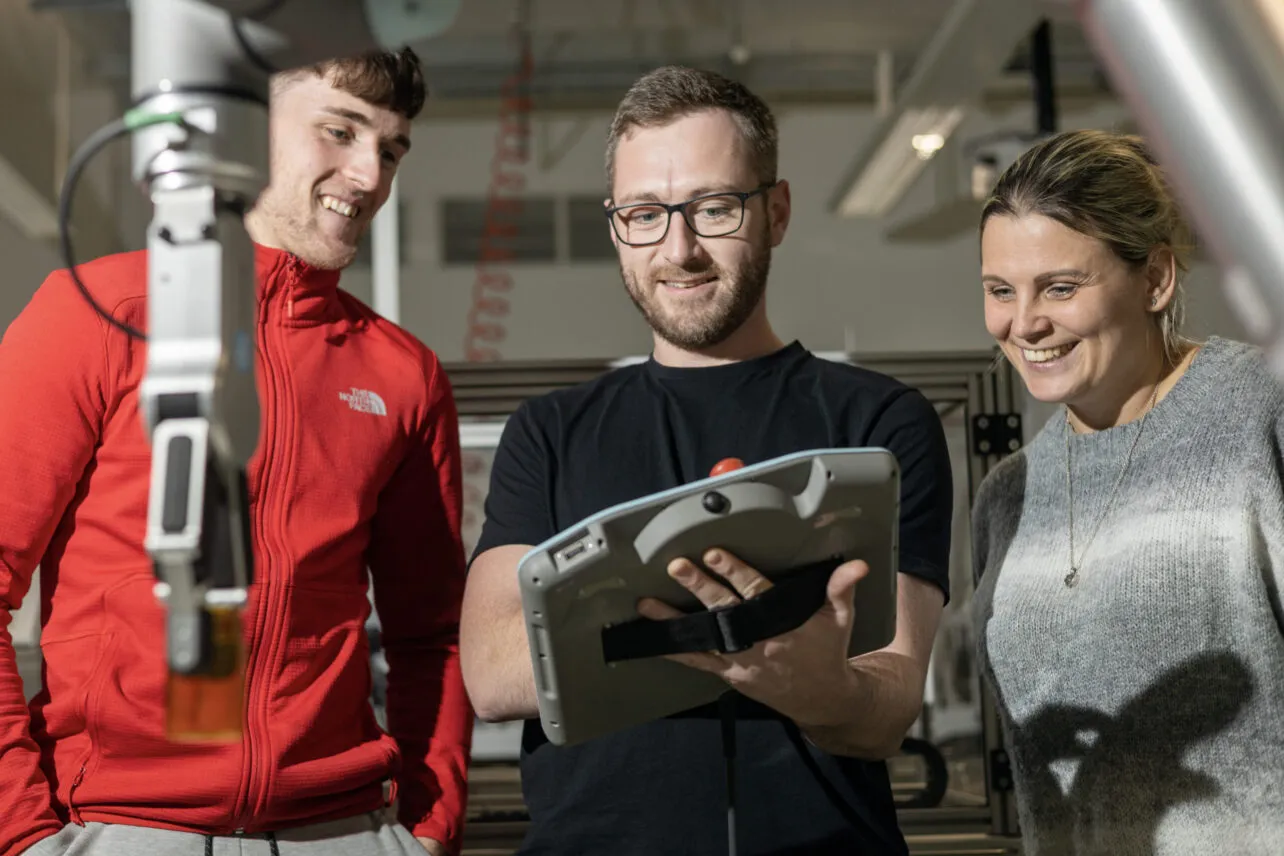
20221007_Automation-Robotics_TUS-Athlone-Campus_002
Introduction

The PhD in Digitalisation Engineering will train and produce highly qualified professionals at the forefront of the specific scientific domains in the technological field of the digital transformation of companies and institutions, namely by studying, developing and implementing innovative solutions with digital technologies.

The programme, based on the creation of knowledge through international cooperation integrated within the European University RUN-EU, aims to provide appropriate training for the exercise of technical and scientific activities, integrating knowledge and developing innovation in multidisciplinary professional environments, with high levels of ethics, environmental awareness, and high standards of demand and competitiveness. This approach enables capable professionals of contributing to economic and industrial development in different regions of the European area.

Offered by Technological University of the Shannon, the School of Technology and Management of the Polytechnic of Leiria (Portugal) , in association with the Polytechnic Institute of Cávado and Ave (Portugal). The PhD in Digitalisation Engineering is part of the educational project of the three institutions, aiming to contribute to common objectives, namely the development and consolidation of centres of competitiveness and innovation in digital technologies, aligning its programme with the areas of smart specialisation of the regions where the institutions are located.

Programme Coordinator

Dr Siobhán Moane – Siobhan.Moane@tus.ie

Faculty

Engineering & Technology

Location

Blended (Limerick & Portugal)

Language

English

Type

Doctoral Degree (PhD)

Length

3 years

Programme Objectives

Students are expected to develop the following knowledge, skills and competences:

  • Mastery of state-of-the-art digital technologies applied to the automation of processes and services;
  • Ability to analyse and investigate complex challenges, and propose new solutions incorporating knowledge of digital technologies;
  • Ability to conceive, design and develop innovative products and/or processes for industrial and service digitalisation;
  • Ability to lead and collaborate in interdisciplinary and international projects, as well as organize, synthesise, communicate and disseminate the generated scientific knowledge, respecting the ethics and methods of scientific research.

Outline Y1

  • Knowledge and Knowledge development: defining knowledge, types of knowledge and knowledge cycle
  • Underlying assumptions of each paradigm: Philosophy, Ontology Epistemology and Methodology
  • Inter-relationships between paradigms: theory generation, and hypothesis testing
  • Literature review methodology
  • Critical thinking and scientific thinking
  • Methodology and methods: experimental, quasi-experimental and non-experimental design, qualitative methods, and mixed methods
  • Development of project and research proposals
  • Ethical responsibilities in the research process.
  • Ethical challenges during research projects.
  • Strategies for handling pressure and difficult situations.
  • Local and professional policies and guidelines regarding research integrity.
  • Recognising improper conduct in research and procedures to follow in cases of misconduct in accordance with best practices.

Students must choose one of the following curricular units. For more information, please lock at “Elective I and Elective II – available curricular units”

  • Data Analytics and Machine Learning
  • Antennas, Propagation and Remote Sensing
  • Database and Data Visualisation
  • Cybersecurity
  • Intelligent Control
  • Digitalisation of Production Systems
  • Intelligent Data Fusion
  • Processing, Analysis and Coding of Digital Information
  • Robotics
  • Smart Cyberphysical and IoT Systems
  • Energy Transformation
  • Complementary Skills in Digitalisation Engineering I

Students must choose one of the following curricular units. For more information, please loock at “Elective I and Elective II – available curricular units”

  • Data Analytics and Machine Learning
  • Antennas, Propagation and Remote Sensing
  • Database and Data Visualisation
  • Cybersecurity
  • Intelligent Control
  • Digitalisation of Production Systems
  • Intelligent Data Fusion
  • Processing, Analysis and Coding of Digital Information
  • Robotics
  • Smart Cyberphysical and IoT Systems
  • Energy Transformation
  • Complementary Skills in Digitalisation Engineering II
  • Writing of a scientific article or a detailed scientific work plan.
  • Submission of a scientific article to a conference.
  • Preparation, public presentation and discussion of the scientific work.

The contents will depend on the topic chosen by the student, but the study will consist of aspects considered relevant to the topic of research in which the student prepares his thesis plan, including the identification of problems, particularly in an industrial context, the prior evaluation of existing solutions, a survey of the state of the art and the work plan of to be carried out during the PhD. Students will also acquire knowledge about the scientific method and will develop different technological research work approaches.D

Outline Y2

  • Concepts of Data Analytics and Machine Learning
    • Data analysis methodologies;
    • Collection, generation and deployment of data;
    • Data exploration;
    • Data pre-processing;
    • Machine learning techniques;
    • Model evaluation and selection.
  • Time series analysis
  • Process Mining
    • Business process management;
    • Data pre-processing;
    • Discovery, compliance and improvement of business processes.
  • Big Data techniques
    • Large-scale data storage and processing
  • Advanced Data Analytics and Machine Learning techniques
    • Reinforcement Learning;
    • Deep Learning;
    • Generative AI;
    • Explainable AI;
    • Fair AI;
    • Edge AI;
    • Training deep neural networks using deterministic methods.
  • Ethical and privacy issues related to Data Analytics and Machine Learning
  • Fundamentals of Electromagnetic Theory
    • Covers Maxwell’s equations;
    • Wave propagation;
    • Antenna theory;
    • Physical interpretations of electromagnetic phenomena.
  • Numerical Methods
    • FDTD, FEM, MoM;
    • High-frequency methods;
    • Simulation software tools.
  • Antenna Modelling
    • Antenna fundamentals;
    • Types, arrays, and design optimization.
  • Electromagnetic
    • Wave propagation;
    • Scattering, and communication/radar applications.
  • Remote Sensing
    • Principles of SAR;
    • Microwave remote sensing;
    • Passive radar;
    • Various applications.
  • Measurement Techniques
    • Near-field/far-field measurements;
    • Antenna characterization;
    • Scattering parameters;
    • Field measurements;
    • Radar systems.
  • Special Topics
    • Metamaterials;
    • Multi-physics simulations;
    • Inverse problems.
  • Distributed DBMS Architecture
  • Distributed Database Design
  • Query Processing and Decomposition
  • Distributed query optimisation
  • Transaction Management
  • Distributed DBMS Reliability
  • Parallel Database Systems
  • Distributed object Database Management Systems
  • Object-Oriented Data Model
  • Data visualisation
  • Tools for data visualisation
  • Information Security and Cybersecurity
  • Network Security
  • Digital Forensic Analysis
  • Malware Analysis
  • Information Systems Risk Analysis
  • Ethics, Compliance, and Human Factor
  • Practical Cases
  • Introduction to Intelligent Control Systems
    • Overview of Control Systems;
    • Introduction to Intelligent Control;
    • Historical Perspective and Applications;
    • Challenges and Opportunities in Intelligent Control.
  • Machine Learning for Control
    • Regression and Classification for Control;
    • Reinforcement Learning and Control;
    • Deep Learning for Control Applications;
    • Case Studies: Control Using Machine Learning.
  • Evolutionary Algorithms for Control
    • Genetic Algorithms for Optimization;
    • Genetic Programming for Control;
    • Evolutionary Strategies for Control;
    • Case Studies: Evolutionary Control Techniques.
  • Neural Networks for Control
    • Introduction to Artificial Neural Networks (ANNs);
    • Multilayer Perceptron’s (MLPs) for Control;
    • Recurrent Neural Networks (RNNs) for Control;
    • Case Studies: Neural Network-Based Control Systems.
  • Real-world Applications and Case Studies
    • Real-world Applications of Intelligent Control.
  • Intelligent Production Systems
    • Concept;
    • Requirements;
    • Relationship with Industry 4.0.
  • Fundamentals of Manufacturing Execution Systems
  • Introduction to the digital thread and technologies for Industry 4.0
    • Approach to digital manufacturing (3D Design, finite element analysis and generative design);
    • Additive manufacturing;
    • Simulation in production and logistics;
    • Digital instructions, virtual and augmented reality;
    • Digital Twin;
    • Smart machining;
    • Cyber-Physical Production Systems.
  • Organizational concepts for Industry 4.0
    • Work 4.0;
    • Operator 4.0;
    • Impact of Industry 4.0.
  • Introduction to the fusion of sensory information
    • Sensory information;
    • Sensor network architectures;
    • Communication protocols.
  • General aspects of data fusion
    • Data alignment – spatial, temporal, semantic and normalization;
    • Calibration processes;
    • Errors: inconsistency, noise, lack of information, outliers.
  • Data fusion based on statistical methods
    • Fundamentals;
    • Common data representation in Principal Component Analysis (PCA) and Linear Discriminant Analysis (LDA);
    • K-Means Cluster;
    • Kalman and Extended Kalman Filter;
    • Mixture of Gaussians.
  • Data fusion based on machine learning and artificial intelligence
    • Fundamentals;
    • Database creation;
    • Decision trees;
    • Neural Networks;
    • Deep Learning.
  • Performance evaluation strategie
  • Models of digital representation of visual information in different modalities
    • Multi-view, 3D, plenoptic, holographic, point clouds and omnidirectional;
    • Dermoscopic, light-sheet, MRI, PET, CT;
    • Thermal (infrared), multispectral.
  • Multidimensional information segmentation, identification and classification algorithms
    • Computer vision solutions based on deep convolutional neural networks;
    • Performance, optimisation and software tools.
  • Image, video and multidimensional signal coding algorithms
    • Advanced techniques for image, video and multidimensional signal compression in international standards;
    • Recent advances in the field of image and video compression using regions of interest;
    • New coding paradigms based on machine learning.
  • Technological innovation in applications and integrated systems for digitalisation
    • Coding, communication, processing, and analysis of visual information.
  • Introduction
  • General robotics’ concepts
  • Artificial Intelligence in Robotics
  • Ongoing R&D projects in the partner institutions
  • Architectures for Robotic Agents
    • Reactive, Deliberative, Hybrid;
    • Belief, desire, and intentions;
    • Cooperative architectures.
  • Perception in Robotics
    • Proprioceptive and exteroceptive sensors;
    • Computer vision and depth sensors applied to robotics;
    • Sensor fusion techniques.
  • Localization and Mapping
    • World model representation, generation, and update;
    • Localization and mapping techniques;
    • World exploration.
  • Actuation and Control in Robotics
    • Kinematics and dynamics;
    • Actuators and associated physical parameters;
    • Robots and their simulation.
  • Navigation
    • Navigation algorithms in known and unknown environments;
    • Safety.
  • Collaborative Robots
    • Impedance control;
    • Robot safety features;
    • Programming a collaborative robot
  • Overview of the Internet of Things
    • Concepts;
    • Architecture;
    • Use Cases.
  • Embedded hardware systems for data acquisition
    • Sensors;
    • Actuators.
  • Low-power wireless communications infrastructure and protocols
  • System integration with the cloud
    • Data transfer interfaces;
    • Protocols.
  • Data Processing and Analysis for IoT
  • Security and Privacy in IoT
  • Distributed architectures for IoT systems
  • Anytime Anywhere IoT service’s
  • Smart IoT Ecosystems
  • Characterisation and evaluation metrics for Smart IoT solutionso
  • Framework and motivation
    • Evolution of energy systems
    • Security of supply
    • Environment and climate
    • Sustainability and Circular Economy
  • Structure of Energy Systems
    • Classic monopolistic markets
    • Need for promotion of independent generation
    • Restructuration and liberalization processes
    • Current market functions and agents
  • Characteristics of energy resources
    • Fossil fuels
    • Renewable resources
    • Nuclear energy
  • Energy storage technologies
    • Introduction and historic evolution
    • Lithium-ion batteries and supercapacitors
    • System performance forecast and optimization
    • Modelling and digital simulation
    • Limitations, advanced applications, challenges and future trends
  • Demand-side management and flexibility
    • The concept of demand-side management
    • Demand response as a flexibility option
    • Energy communities and new forms of transaction
  • Digitalization and smart-grids
    • Advanced monitoring
    • Real-time control
    • Proactive management

The following are used as training elements:

  • Technical-scientific missions with a minimum duration of two weeks (2.5 ECTS);
  • Laboratory rotations lasting a minimum of 2 weeks in institutions dedicated to digital innovation and knowledge creation (2.5 ECTS);
  • Summer/Winter Schools held. Diploma with ECTS, maximum of 5 ECTS, otherwise, upon Steering Committee assessment (2.5 ECTS);
  • Carrying out advanced courses “RUN SAP – Short Advanced Program” within the scope of RUN-EU, corresponding to 1 ECTS for each SAP of one week;
  • Publication of scientific articles – 5 ECTS for articles published in journals indexed in the SCI or international patent, and 2.5 ECTS for articles published in other journals or national patent;
  • Participation with presentation (oral or panel) of communications in national and international congresses (2.5 ECTS);
  • Other activities considered relevant by the Steering Committee may also be considered, with a maximum of 5 ECTS.

The following are used as training elements:

  • Technical-scientific missions with a minimum duration of two weeks (2.5 ECTS);
  • Laboratory rotations lasting a minimum of 2 weeks in institutions dedicated to digital innovation and knowledge creation (2.5 ECTS);
  • Summer/Winter Schools held. Diploma with ECTS, maximum of 5 ECTS; otherwise, upon Steering Committee assessment (2.5 ECTS);
  • Carrying out advanced courses “RUN SAP – Short Advanced Program” within the scope of RUN-EU, corresponding to 1 ECTS for each SAP of one week;
  • Publication of scientific articles – 5 ECTS for articles published in journals indexed in the SCI or international patent, and 2.5 ECTS for articles published in other journals or national patent;
  • Participation with presentation (oral or panel) of communications in national and international congresses (2.5 ECTS);
  • Other activities considered relevant by the Steering Committee may also be considered, with a maximum of 5 ECTS.

Outline Y3

The student in this CU “Thesis” must undertake research work on Digitalisation Engineering subjects. The student will develop his research work, as an original contribution, in order to consolidate the knowledge and formulate new hypotheses, products, processes, or services. The student should develop its work autonomously, according to the Thesis Planning approved and supervised by the jury. The specific syllabus will depend on the topic chosen by the student.
During this period, the student will produce scientific papers published in scientific journals and conferences, which will be completed with the writing of a doctoral thesis that integrates all the research work performed and achieved results.

Entry Requirements

Minimum entry requirement, second class honours grade one (2:1) degree. Applicants with an ordinary degree with significant industry experience will also be considered.

    Tuition Fee

    €5,500 per annum

    Application

    Via TUS Graduate School. For more details contact graduatestudies@tus.ie