




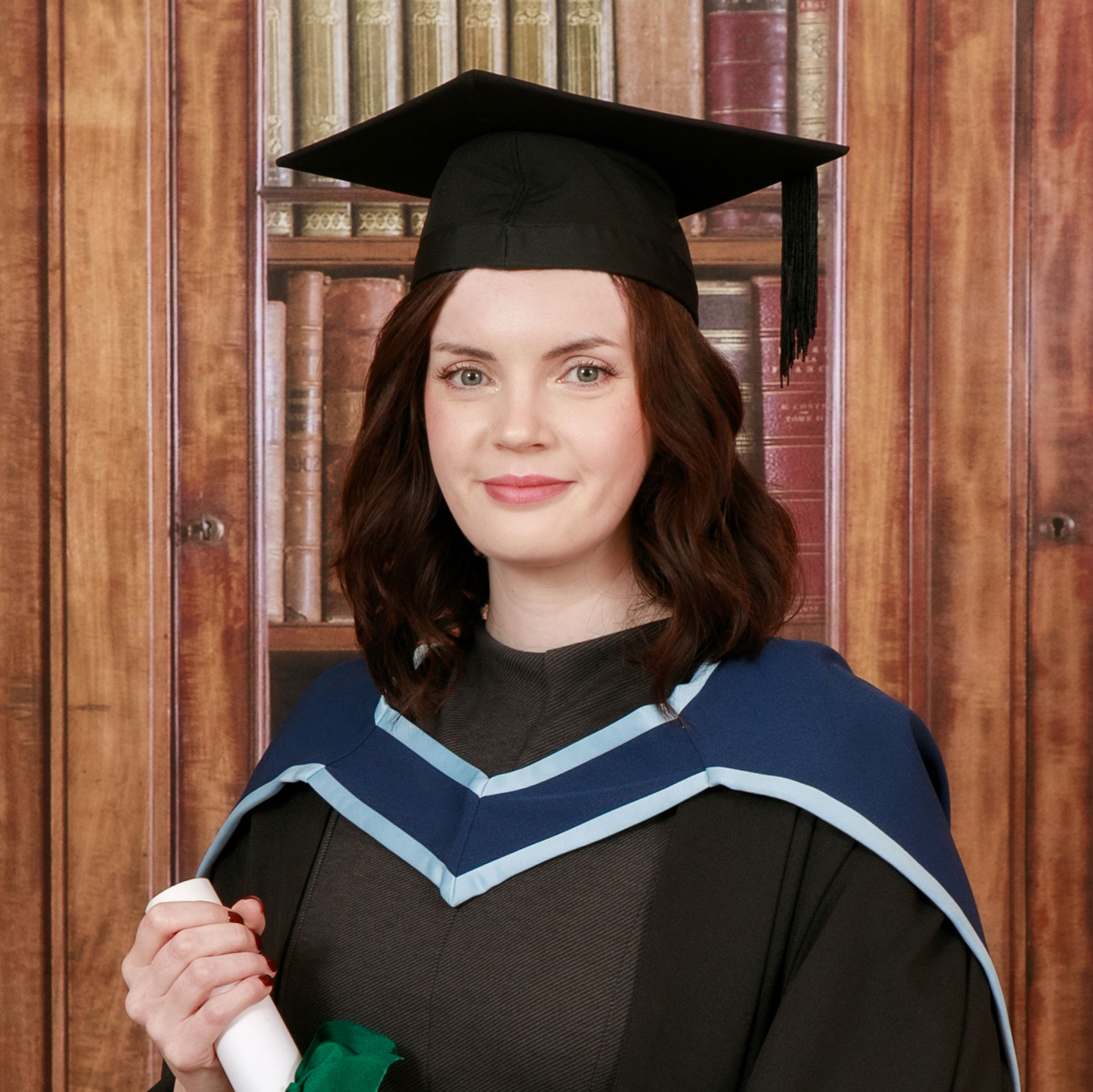
Name: Clara Bowman
Course: MA in Instructional and Learning Design
Why did you choose to study at TUS?
I chose to study my Masters in Instructional and Learning Design at TUS because I was already familiar with the institute from its time as LIT and felt the learning environment suited me well.
In addition, the programme was newly introduced that year, and I saw it as a strong fit with the direction my career was taking. TUS Clare Street was one of only a small number of locations that offered this degree, and after researching the field and its growth, I was confident it would be a valuable area to develop my skills in.
What mode of study did you choose and why?
I chose to study the course fulltime, as it required only one day per week on campus, with the remaining time dedicated to independent study and practice. This suited me well as my employer supported the days I needed.
Having a home office also allowed me to set aside dedicated time for study throughout the year. While balancing the workload was tough to manage at times, the 12 month duration made me confident I could manage it, albeit being a little stressed.
Now that I have completed the course, I am happy with the workload overall and found the course staff extremely supportive and accommodating to my specific needs.
What are the most difficult and most enjoyable aspects of your programme?
The most difficult aspect of the programme would have to be the learning curve in studying learning theories. As this area is so broad and completely new to me, it was a bit overwhelming at times. However, in the end I found it to be one of the most valuable parts of the course, especially when designing instructional learning materials. The content was taught in a clear and engaging way and helped me develop a strong understanding of learners needs and how to design effectively for them.
The most enjoyable aspect of the programme was the collaborative project. While it was stressful at times, I worked with a great group of classmates that really helped support each other and brought the project together. We enjoyed creating the project materials and applying our individual skills in meaningful ways. This experience highlighted how diverse strengths can come together successfully in a large-scale project.
How has this mode of study helped you in your academic career?
This mode of study has supported my academic career by helping me develop strong independent learning and time-management skills. Balancing coursework with my own fulltime job allowed me to become more organised and resilient, especially when managing difficult projects and assignments.
I also gained valuable knowledge in academic writing, which has strengthened my ambition to pursue my PhD in the future, if possible.
What advice would you give to prospective researchers/postgraduate students?
My advice to prospective researchers/postgraduate students would be to stay organised and make the most of self-directed study. One of the biggest differences between undergraduate and postgraduate courses is the emphasis on independent learning. This is extremely valuable to your programme and should not be ignored.
Working independently helps you to develop skills in researching and evaluating existing work on your chosen topics. Make the most of this as it will be the very beneficial when completing your final thesis or major project.
With that, it is important to take time for yourself. Don’t allow the pressure of deadlines to get the better of you. Make sure to relax, go for a walk, run, or do something you enjoy. Your time in college is finite, so make sure to balance your studies with self-care and enjoy the experience.