

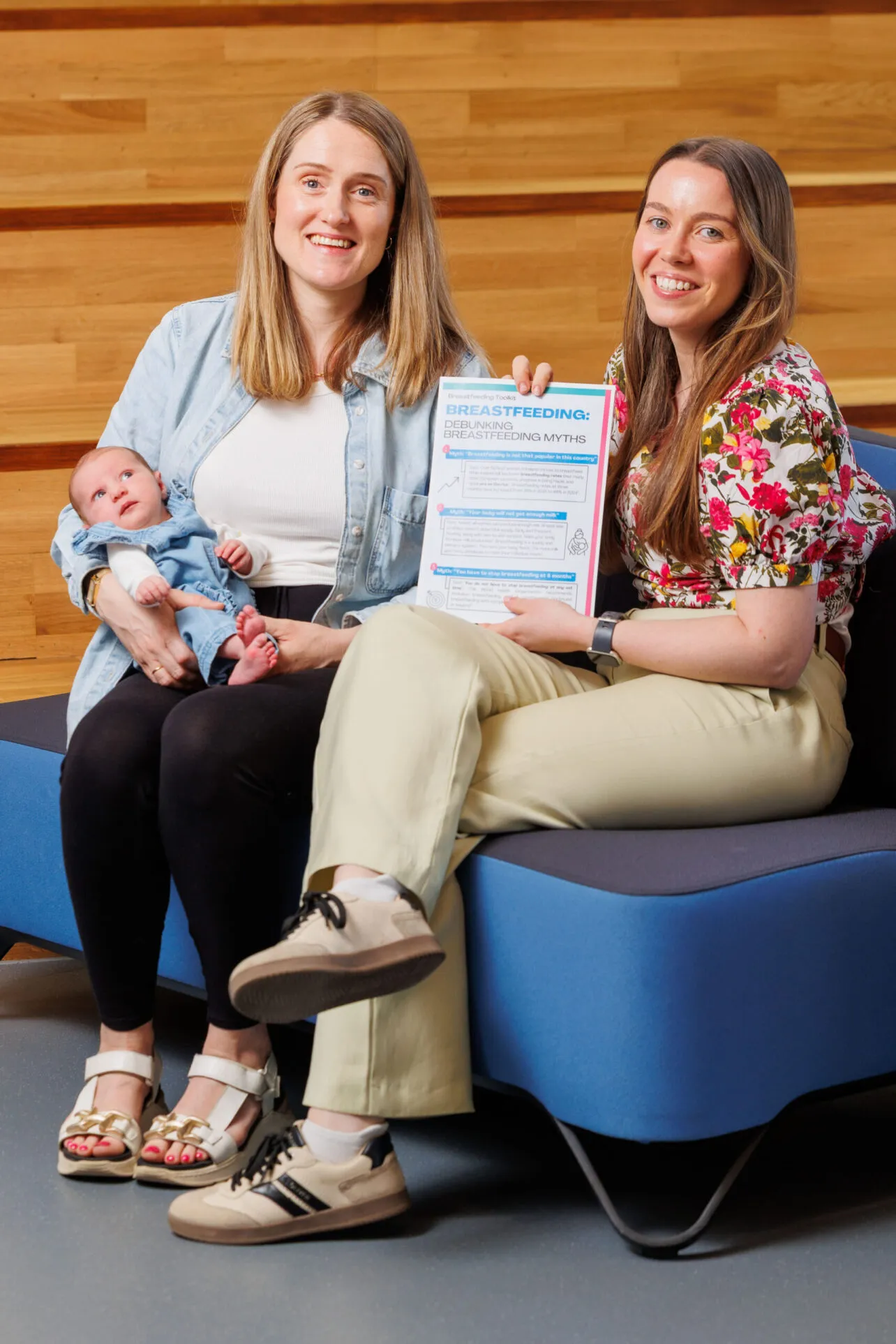
It’s National Breastfeeding Week 2026 until 7th of October and researchers at the TUS SHE Research Centre have developed a Breastfeeding toolkit to highlight the importance of accessible, evidence-based information and support for breastfeeding mothers and their families.
This toolkit builds on TUS’s community engagement during National Breastfeeding Week 2025, when Transition Year students from Athlone Community College contributed artwork to a themed breastfeeding community event on creating sustainable support systems. Involving young people and the wider community in conversations about breastfeeding demonstrates how awareness and understanding of breastfeeding can extend beyond maternity and healthcare settings.
The development of the toolkit also sits alongside ongoing work within the SHE Research Centre. Khayla Timothy, a PhD research student based at TUS Athlone campus, is exploring “Sustainable and Consistent Breastfeeding Support Systems for Mothers and Peer Supporters in Ireland”.
Supervised by Dr Áine O’Connor (TUS), Dr Elizabeth O’Sullivan (Technological University Dublin) and Dr Aoife Lane (TUS), the research explores the impact of support on mothers’ personal breastfeeding goals, the range of supports mothers access throughout their breastfeeding journey, and the importance of receiving support when it is needed most. It also examines the challenges mothers can face when navigating a fragmented support system, with a particular focus on how more sustainable and consistent support systems can better meet the needs of mothers and peer supporters in Ireland.
National Breastfeeding Week is a HSE-led event held during the first week of October each year. This year’s theme, “Every Step Forward: Strengthening Support for Babies and Families”, recognises the role we all have in society in helping to strengthen the support available to breastfeeding mothers and their families.
Together, these initiatives aim to promote greater awareness of breastfeeding, provide accessible information, and ensure that mothers and families know where they can seek support when they need it.