Courses
Admissions & Support

Course Search
Courses
Admissions & Support
Course Search
Our Services
Our Community
Course Search
Governance
Professional Services

Location: Blended
years: 1
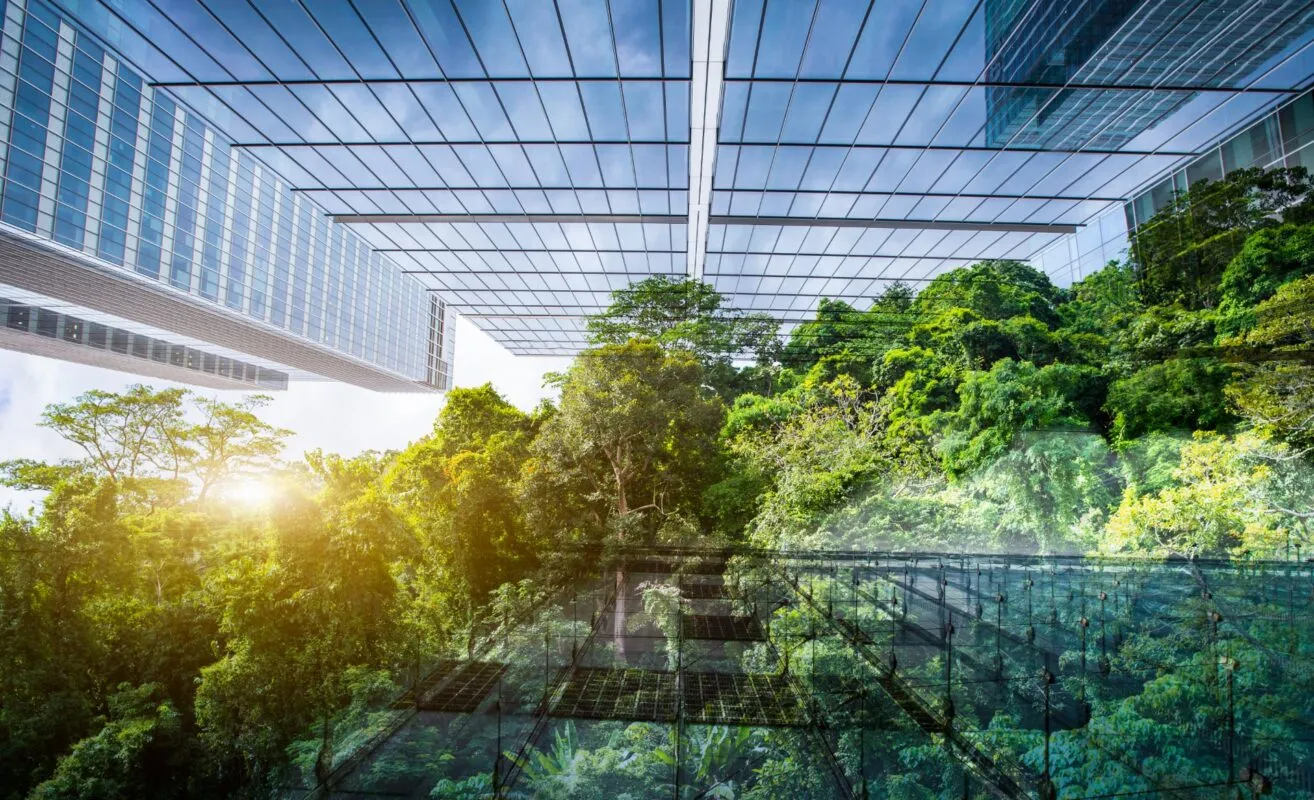
The aim of the Postgraduate Diploma in Science in the Decarbonisation of the Built Environment programme is to up-skill building professionals to develop knowledge and skills that allow them to plan, deliver and manage high quality, sustainable developments, with emphasis on decarbonising the built environment for medium to large sites, districts and community collectives. This will place the learners in a position to contribute to meeting Ireland’s climate action and energy targets in relation to the decarbonisation of the built environment.
Graduates will be employed as climate and decarbonisation experts and advisors within the engineering, construction, and decarbonisation industry.
Certificate in Decarbonisation Solutions for the Built Environment (Option 1)
Credits: 20
Module 1: Decarbonisation Strategies and Options in the Built Environment (10 credits)
Module 2: Decarbonisation Analysis & Solutions in the Built Environment (10 credits)
Certificate in Verifying and Monitoring Decarbonisation (Option 2)
Credits: 20
Module 3: Low Carbon Tools And Assets (5 credits)
Module 4: Sustainability and Biodiversity Assessment (5 credits)
Module 5: Building Information Modelling And Whole Life Cycle (10 credits)
Certificate in Decarbonisation Management (Option 3)
Credits: 20
Module 6: Decarbonisation Planning (5 credits)
Module 7: Business And Investment (5 credits)
Module 8: Sustainable Management AIM (10 credits)
2 Options for the Dissertation
1. Decarbonisation Dissertation:
This is a capstone module which draws from modules delivered throughout the programme. The aim of the module is to encourage learners to develop integrative learning and critical reflection as they bring together a range of concepts, theories, frameworks and practices within a research setting.
The module focuses on the preparation of a large-scale research proposal; analysis and synthesis of extant literature at the forefront of the candidates research interest; application of the findings from literature review to the design; testing and execution of an in-depth; primary research study; interpretation and reporting of findings to supervisor, and the application of both secondary and primary findings to the preparation of clear, well justified conclusions which address the original aims and objectives of the research.
The content includes:
Research Methodologies and Ethics, Critical Literature Review, Research planning and design, Research Tools and Analysis, Critical Analysis, Interpretation and Reporting of findings.
2. Decarbonisation Consultancy Project
This module is a capstone module designed to integrate the learning from the previous three certificates, to integrate the students’ wider contextual analysis, impact assessment, strategic planning and assessment of behavioural norms to provide an action plan and report on the decarbonisation of a site.
The content includes:
Research Methodologies and Ethics, Consultancy Planning & Design, Formulating Technical and Industry-level Review, Practice-based Activity, Interpretation and Reporting of findings.
(a) An honours degree (level 8) in a cognate (e.g. Engineering, Architecture, Building Services, Construction Management etc.,) discipline or approved equivalent qualification
Or
(b) An honours degree (level 8) in a non-cognate discipline with minimum 4 years relevant work experience and/or ability, evidenced by an RPL portfolio of prior experience and learning
Or
(c) Equivalent Qualifications. Applicants with equivalent qualifications on the European and International frameworks will also be considered. International students must evidence a proficiency in English language for example IELTS 6.5.
Recognition of Prior Learning (RPL)
If you do not meet the academic entry requirements listed above but would like your application assessed under RPL please select YES on the online application form. Please include any relevant work experience/further information relevant to your application under the ‘Additional Information’ section.
ENGLISH LANGUAGE: Applicants who do not have English as their first language must ensure they satisfy English Language requirements. For entry to undergraduate courses, a minimum score of 5.5 in an IELTS exam is required. For postgraduate courses, a minimum of 6.0 is required. It is the responsibility of the applicant to ensure their English proficiency meets these requirements.
Evening online lectures on Tuesday and Wednesday (18.30-21.30hrs )
Full day face to face practical workshops or site visits on Saturdays (TBC)
The proposed delivery schedule may be subject to change.
Each 5 credits will normally equate to approximately 100 Total Learning Hours. Total Learning Hours includes the time you spend in class (lectures, tutorials, practical elements) and the time you spend completing work outside of college. The balance between these two varies by discipline, and by level of study. You should bear in mind that the workload will increase at particular times e.g. when assignments are due.
Assessment is continuous assessment and online exams.
Postgraduate Diploma in Science in the Decarbonisation of the Built Environment (L9, 60 ECTS)
€8,500
TBC
Applications will close 2 weeks before the listed start date or once the maximum number of applicants is reached
Places are allocated on a first come first served basis
Programme run subject to viable numbers
Academic Queries
Email: info@DASBE.ie
Join the TUS Flexible Learning Community
Click here