Entry Requirements
Applicants should hold a Higher Certificate in Engineering with Music & Instrument Technology at Level 6, or an equivalent qualification.

Course Search
Courses
Admissions & Support
Course Search
Our Services
Our Community
Course Search
Governance
Professional Services

CAO Points: N/A
Location: Athlone
years: 1
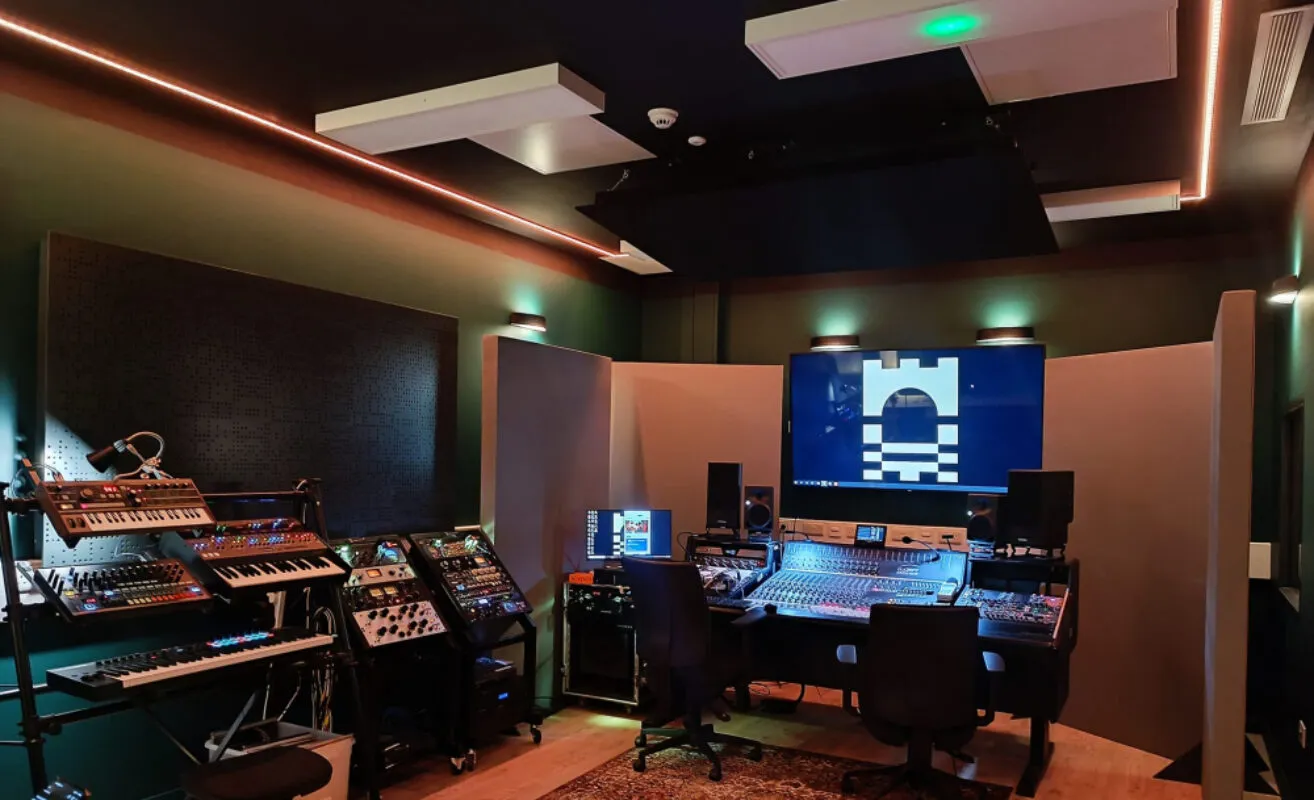
This one-year add-on will continue to develop students theoretical and practical knowledge gained from the H.C in Engineering with Music & Instrument Technology, Level 6, or from another similar programme.
These continuing studies will provide more opportunities for students to develop and exhibit the knowledge, skills and competencies to become highly skilled in the area of Music and Sound Engineering in respect to the professional creative industries.
Why take this course?
As a Music and Sound Engineering student, you will be involved in a wide range of industry-specific assignments and practical work across this add-on which encompasses sound engineering, acoustic technology, and other creative professional development studies that are necessities for working in the creative industry.
This diversity aims to give graduates of the programme a range of real skills and the flexibility required to work within a highly competitive creative industry, and on completion of the course, you will have assembled an impressive portfolio of industry-related work to take forward into your career, or on to further studies in the area. There is also a Level 8 add-on available to Music and Sound Engineering students.
Music and Sound Engineering students also have unrivalled access to industry standard equipment and software in state-of-the-art facilities based in one of Ireland’s most prestigious Technological Universities, right in the heart of Ireland.
Being a musician is not a pre-requisite for entry, so the Music and Sound Engineering course is suitable for all candidates.
Applicants should hold a Higher Certificate in Engineering with Music & Instrument Technology at Level 6, or an equivalent qualification.
Sound Engineering
Credits: 10
The Sound Engineering 3.1 module will introduce the technical requirements of audio as well as production techniques required for broadcast. This module will push the learner to employ advanced recording and mixing techniques used in respect to broadcast. Where appropriate, Sound Engineering 3.1 students will collaborate with students from the Bachelor of Business (Hons) in Digital Marketing programme to create content for formative assessment(s).
Acoustic Technology
Credits: 5
Acoustic Technology 3 builds on the skills and techniques developed during the Instrument Technology modules, with a focus on how to apply these fabrication skills in different sound environments. Where appropriate, Acoustic Technology 3 students will be given a room in the Engineering and Informatics building on the TUS, Athlone Campus that may have acoustic response issues. Students will then have the opportunity to design, produce, and instal acoustic treatment for this room
Sound for Film and Television 3
Credits: 5
This module will explore a variety of supplementary key concepts in music technology and multimedia. It has a practical orientation that will see students work in authentic scenarios to experience work typical to the sound to picture industry. Students will work to develop a portfolio to aid them in their career and will develop their presentation skills to effectively communicate their ideas. It is intended that Sound for Film and Television 3 students will create an online folder that contains audio assets generated during assessment work that will be shared with students from the BA (Hons) in Animation and Illustration and B.Sc (Hons) in Software Design with Virtual Reality and Gaming programmes.
Audio Electronics 3.1
Credits: 5
This module introduces the candidates to engineering science and explains the concepts of instrumentation, heat, energy, waves and electrical principles in a Music and Sound Engineering context. It contains theoretical, practical and empirical material.
Work Placement 3
Credits: 5
This is a self-directed module providing students with the opportunity to build their industry experience as part of their programme accreditation. Each student will identify and secure one placement within areas of the professional Creative Industry in which they are interested. Programme staff can support the student by providing introductions to potential placement providers. As part of the placement in the students chosen field, the module aims to develop each participant’s technical, communication, observation, and reflective abilities. Students may also choose to set up or partake in a civic engagement project within their local community.
Sound Engineering 3.2
Credits: 10
Sound Engineering 3.2 will examine in-depth the key practical and theoretical concepts of the production of professional Popular Music and Electroacoustic Music, Sound Design and Audio Mixing.
Video Game Audio 3
Credits: 5
This module will explore the development of technology and emerging technologies that have facilitated the progression of Music and Sound Engineering in respect of the Video Game industry. It is intended that Video Game Audio students will create an online folder that contains audio assets generated during assessment work that will be shared with students from the BA (Hons) in Animation and Illustration and B.Sc (Hons) in Software Design with Virtual Reality and Gaming programmes.
Visual Creation 3
Credits: 10
This module is an exploration of the principles of image making with an emphasis on the moving image. Where appropriate, Visual Creation 3 students will collaborate with students from the BA in Graphic and Digital Design programme for formative assessment(s) over the duration of the module.
Audio Electronics 3.2
Credits: 5
This module introduces the candidates to engineering science and explains the concepts of instrumentation, heat, energy, waves and electrical principles in a Music and Sound Engineering context. It contains theoretical, practical and empirical material.
Working within the very competitive creative industry requires graduates to have a very driven attitude and to most likely have a ‘blended income portfolio’ i.e., to have several different revenue streams from different work opportunities within the creative industry. It is usually not an industry that seeks out qualified individuals, rather it is the individual that must seek the opportunity out. It is the drive and determination to identify and take these opportunities that the Music and Sound Engineering course aims to instil in all graduates.
Graduates from the programme will be qualified to assume a technical position(s) in the following areas of the professional creative industry: Recording Studio Sound Engineer, Live Sound Engineer, Broadcast Sound Engineer for Radio & TV, Foley Artist, Audio Visual Technician for TV & Film, Video Game Audio Technician, Multi-Media Sound Designer, Event Organiser, Instrument Building & Maintenance Technician, Business Entrepreneur, Music Producer, Acoustician, Audio Coding Developer, Audio Visual Artist. This is not an exhaustive list and graduates might find new niches and positions within the professional creative industry in which to work.
Successful graduates of this course are eligible to apply to the Level 8 in Music and Sound Engineering at TUS.