Courses
Admissions & Support

Course Search
Courses
Admissions & Support
Course Search
Our Services
Our Community
Course Search
Governance
Professional Services

Location: Blended
years: 1.5
Fees: € 5,700
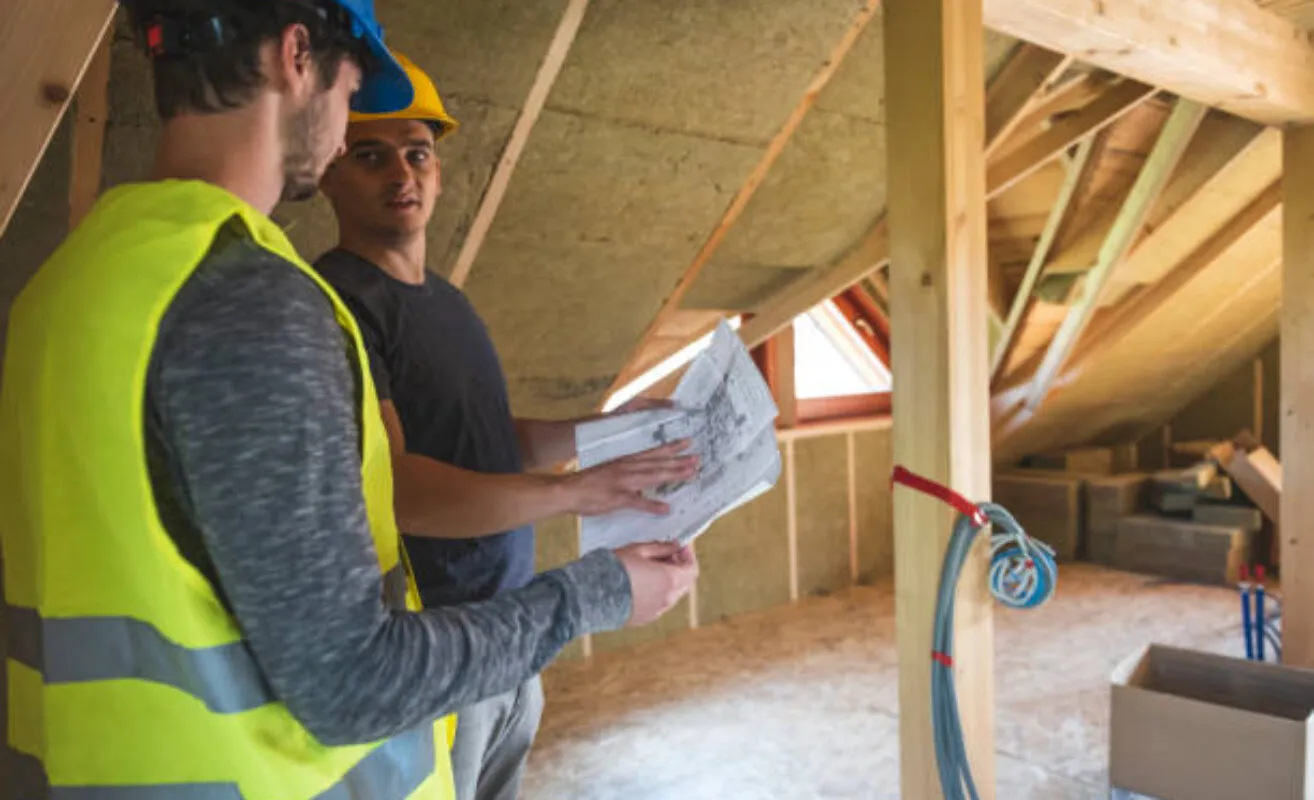
The aim of the Higher Diploma in Energy Renovation for Traditional Buildings programme is to up-skill building professionals to develop knowledge and skills that allow them to plan, deliver and manage high quality, energy-efficient renovations of existing traditional buildings (pre 1940s). This will place them in a position to contribute to meeting Ireland’s climate action and energy targets in relation to the green renovation of buildings. It will additionally boost demand for energy efficiency from building owners and the public sector by having a trusted industry professional/standard for unique traditional energy retrofitting experts and advisors. Graduates will be employed as Energy Renovation experts and advisors within the construction and conservation heritage industry, and as a Traditional Building Professionals providing services within the SEAI Advisors and One Stop Shops.
Fundamentals in Energy Renovation Of Traditional Buildings (5 ECTS)
Building Defects Detection and Analysis (5 ECTS)
Traditional Building Regulation Energy Compliance (5 ECTS)
Fundamentals in BIM ISO19650 (5 ECTS)
Energy and Carbon Assessment (5 ECTS)
Low Carbon Systems (5 ECTS)
Performance Assessment Methods (5 ECTS)
Heritage Building Information Modelling And Facilities Management (5 ECTS)
Renovation Planning and Financing Strategies (5 ECTS)
Project Management (5 ECTS)
Energy Renovation Project (10 ECTS)
An honours degree (level 8) in a cognate (e.g. Engineering, Architecture, Building Services, Construction Management etc.) discipline or approved equivalent qualification
Or
A level 7 qualification in a cognate discipline (e.g. Engineering, Architecture, Building Services, Construction Management etc.,) or approved equivalent qualification, with 1-year relevant work experience.
Or
Recognition of Prior Learning (RPL)
If you do not meet the academic entry requirements listed above but would like your application assessed under RPL please select YES on the online application form. Please include any relevant work experience/further information relevant to your application under the ‘Additional Information’ section.
English Language: Applicants who do not have English as their first language must ensure they satisfy English Language requirements. For entry to undergraduate courses, a score of 5.5 in an IELTS or equivalent exam is required. For postgraduate courses, a score of 6.0 in an IELTS or equivalent exam is required. It is the responsibility of the applicant to ensure their English proficiency meets these requirements. Please note that we do not request proof of English language qualification or proficiency.
Delivered over 1.5 years (3 semesters) in a blended learning format.
Wednesday and Thursday evening online lectures 6.30pm-21.30pm weekly.
Full day face to face practical workshops and site visits on Fridays or Saturdays (TBC).
The proposed delivery schedule is subject to change.
Each 5 credits will normally equate to approximately 100 Total Learning Hours. Total Learning Hours includes the time you spend in class (lectures, tutorials, practical elements) and the time you spend completing work outside of college. The balance between these two varies by discipline, and by level of study. You should bear in mind that the workload will increase at particular times e.g. when assignments are due.
Higher Diploma in Energy Renovation of Traditional Buildings (L8, 60 ECTS)
€5,700
Applications will close 2 weeks before the listed start date or once the maximum number of applicants is reached.
Places are allocated on a first come first served basis.
Programme run subject to viable numbers.
General Queries
Flexible Learning Office
Email: flexible.midwest@tus.ie
Telephone: (061) 293802
Academic Queries
Paul Vesey
Email: Paul.Vesey@tus.ie
Join the TUS Flexible Learning Community
Click here