
Course Search
Courses
Admissions & Support
Course Search
Our Services
Our Community
Course Search
Governance
Professional Services

Location: Online
weeks: 15
Fees: Funded by the Micro-credential Learner Fee Subsidy 2026. See Fees Section Below.
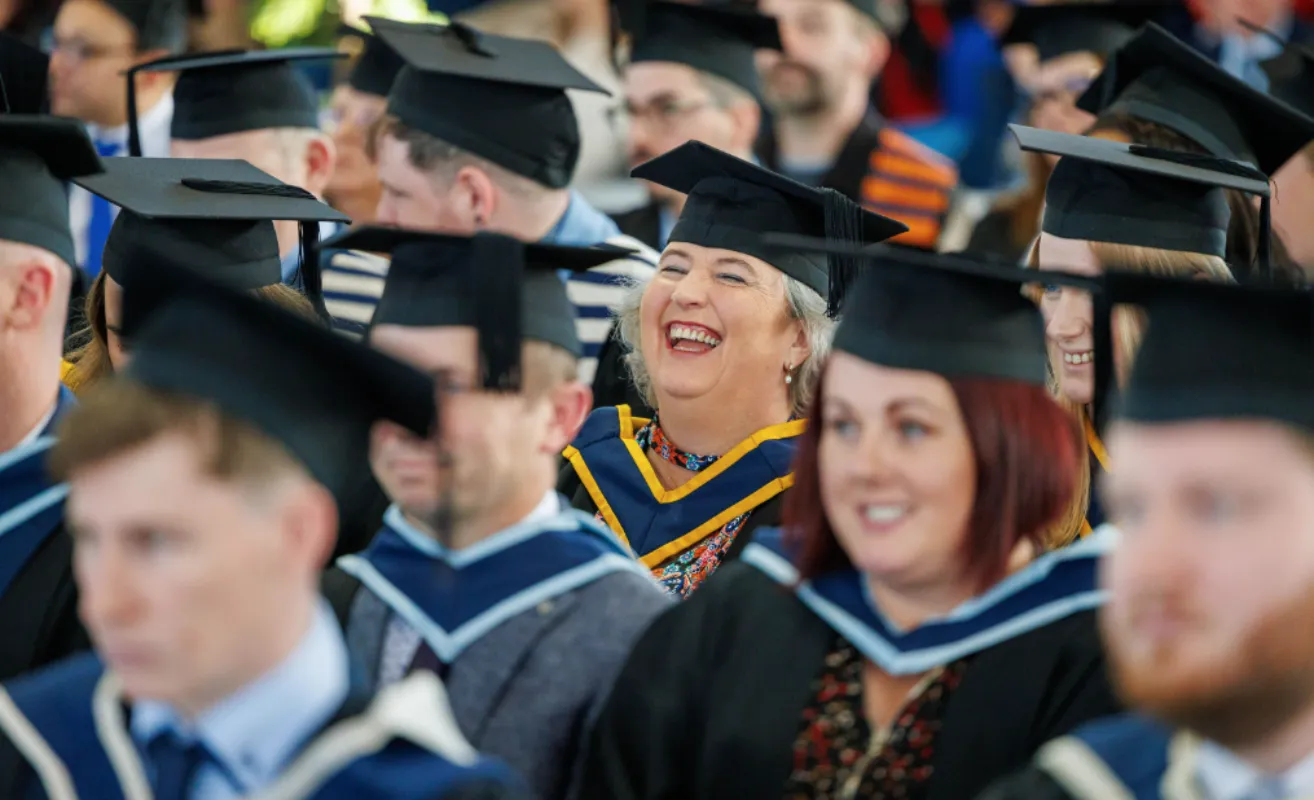
The Sustainable Product and Process Development programme is a Level 9 Special Purpose Award Certificate embedded within the Master of Engineering (MEng) in Mechanical Engineering programme at Technological University of the Shannon (TUS).
This Level 9 Special Purpose Award Certificate is embedded within the Master of Engineering (MEng) in Mechanical Engineering at TUS and may support progression within postgraduate engineering studies.
This flexible, industry-focused module is designed to provide learners with advanced knowledge and practical skills in sustainable engineering, product lifecycle assessment, circular economy principles, and sustainable manufacturing processes. Learners will explore the environmental impacts of engineering products and processes while developing practical approaches to sustainable product design, resource efficiency, waste minimisation, and energy optimisation within industrial and manufacturing environments.
The programme combines theoretical knowledge with practical engineering applications, enabling learners to apply sustainability principles and system-level thinking to real-world engineering and manufacturing challenges. Delivered through a flexible blended-learning approach, the module supports independent learning, critical thinking, problem-solving, and collaborative project-based learning relevant to modern sustainable engineering practice.
The aim of this programme is to equip learners with advanced knowledge and practical skills in sustainable product and process development relevant to modern engineering and manufacturing industries.
The programme aims to:
-Develop understanding of sustainability principles within engineering and manufacturing
-Introduce lifecycle assessment (LCA) methodologies and sustainability evaluation tools
-Enhance learners’ ability to design sustainable products and processes
-Support circular economy, resource efficiency, and waste reduction strategies
-Develop system-level thinking and sustainable decision-making capabilities
-Strengthen research, communication, and critical evaluation skills
-Prepare graduates and professionals for the increasing importance of sustainability and environmental responsibility within industry
The module is suitable for graduates and professionals working within mechanical engineering, manufacturing, industrial, sustainability, and wider STEM-related sectors.
1. Introduction to Sustainability in Engineering
2. Lifecycle Assessment (LCA)
3. Sustainable Design Principles
4. Circular Economy and Waste Minimization
5. Sustainable Manufacturing Processes
6. Energy Efficiency and Optimization
7. Sustainable Supply Chain Management
8. Emerging Technologies in Sustainable Engineering
A minimum Second Class Honours, Grade 2 (H2.2), in a Level 8 Mechanical Engineering degree OR related engineering discipline, or equivalent, from a recognised university or third-level college, or international equivalent engineering programme (as described above).
or
Any qualification(s) deemed by the TUS as being equivalent to point 1. above, when taken in conjunction with Recognised Prior Learning (RPL) and/or relevant work experience.
or
Recognised Prior Learning (RPL)
If you do not meet the academic entry requirements listed above but would like your application assessed under RPL please select YES on the online application form. Please include any relevant work experience/further information relevant to your application under the ‘Additional Information’ section.
English Language: Applicants who do not have English as their first language must ensure they satisfy English Language requirements. For entry to undergraduate courses, a score of 5.5 in an IELTS or equivalent exam is required. For postgraduate courses, a score of 6.0 in an IELTS or equivalent exam is required. It is the responsibility of the applicant to ensure their English proficiency meets these requirements. Please note that we do not request proof of English language qualification or proficiency.
Modules are to be delivered over 15 weeks in a Online learning format as follows;
Every Monday at 7pm to 10pm
The proposed delivery schedule is subject to change.
Each 5 credits will normally equate to approximately 100 Total Learning Hours. Total Learning Hours includes the time you spend in class (lectures, tutorials, practical elements) and the time you spend completing work outside of college. The balance between these two varies by discipline, and by level of study. You should bear in mind that the workload will increase at particular times e.g. when assignments are due.
100% Continuous Assessment
Special Purpose Award
Certificate in Mechanical Engineering in Sustainable Product and Process Development (Level 9, 10 ECTS)
This course is funded by the Micro-credential Learner Fee Subsidy 2026 programme and fees are subsidised at 80% for all eligible learner categories.
Full Fee is € 1,420
*Limited Places*
Places are allocated on a first come first served basis.
The programme will close once the maximum number of applicants is reached.
Final closing date for any unfilled places will be the 15th November 2026.
Programmes run subject to viable numbers.
Academic Queries
Orlagh Doyle
Email: orlagh.doyle@tus.ie
Join the TUS Flexible Learning Community
Click Here