
Course Search

Course Search

Course Search

Creative Broadcast and Film Production – BSc

  • CAO Points: 241

  • Location: Moylish, Limerick City

  • years: 3


Course Overview

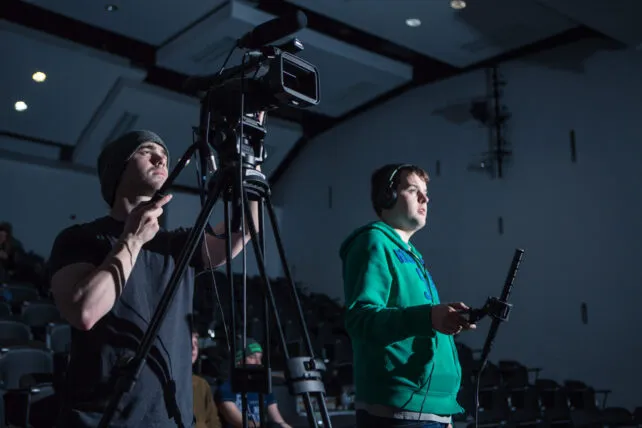
This skills-based programme offers students an exciting opportunity to explore the world of the film and broadcast media industry, covering a range of disciplines across film and TV production, visual effects, editing, radio production, screenwriting, mobile journalism, Art Direction, audio mixing, photography, event production as well as broadcast technologies across a range of new and traditional media platforms.

Upon successful completion of this Level 7 programme, students can progress to a Level 8 B.Sc (Honours) degree.

We offer our students a range of prospects for both academic and career progression in the broadcast, film, digital communications and creative media industries, as well as extensive hands-on production Work Placement/ Practice/ Erasmus opportunities in Year 3. If you have a story to tell, we will show you how.

Features of the Programme
  • Industry-led Production & Post-Production Practices including Digital Photography & Cinematography Techniques; Creative Design for CGI, VFX & Digital Art Direction; Audio production techniques and sound design; Screenwriting and Film Studies
  • Media Production Industry Work Practice/ Placement/ Exchange in Year 3 for full Semester
  • In-house Production Unit offering structured industry work practice opportunities to students in Year 3
  • Outstanding graduate employment opportunities in Film and Broadcast Media industries
  • Semesterised module delivery offering elective pathways towards specialisation
  • Engagement and track record of award-winning student productions in national and regional competitions and Film Festivals
  • Students are part of the vibrant Limerick School of Art and Design community

Contact Details

Department of Digital Arts and Media

Email: Film.Midwest@tus.ie

What are the entry requirements?

Leaving Certificate

A minimum of 5 O6/H7 grades in Leaving Certificate subjects, including English/Irish.

Foundation Level Mathematics at grade F2 or higher is acceptable as meeting the Mathematics requirement for this programme.

QQI FET/FETAC

TUS accepts QQI-FET/FETAC awards for entry on all courses of study. Please refer to our Admissions information for details.

Mature Applicants

Candidates applying as mature applicants may be required to attend an interview and may be requested to take an aptitude test to prove their suitability for a place on this programme.

International Applicants

International applicants should apply directly to the International Office at TUS, allowing plenty of time for completing the visa process. Applications for September start should be made by 1st June at the latest to ensure visas are processed in time. You should familiarise yourself with visa processing times for your country of origin to ensure you make a timely application. Find out more here.

Course Modules

  • Broadcast Production Techniques

    Credits: 5

    A study of the workings of the Broadcast Media Industry and an introduction to Television programme production across three stages of production. Analysis of current trends and practices in traditional, new and emerging broadcasting technologies is fundamental to this module and therefore requires the learner to watch television and engage with a range of broadcast formats and platforms including television, online broadcasting platforms and radio regularly. The practical element of this module gives the learner experience of television camera operating and basic video and audio production techniques in a portable single camera context

  • Sound Fundamentals

    Credits: 5

    Introduces the learner to basic principles of the physics and perception of sound. Applied aspects of this module include critical listening, fundamental operation of microphones, recorders and audio software.

  • Media Management And Post Production

    Credits: 5

    This module introduces offline editing tools and concepts. Media Management is the process of labelling, storing and backing up your media. Practising good workflow procedures for Broadcast and film projects. This module will introduce students to the concepts of file formats, resolutions and frame rates in post-production both for standard definition and high definition sectors.

  • Film History And Film Theory

    Credits: 5

    This module will introduce you to key developments in the history of film and cinemagoing from pre and early cinema in the 1890s through to the Digital Age. Through a series of case studies, the module introduces you to a range of key movements, trends and moments in international film history in countries such as Britain, Italy, France, Japan, Germany, India and the USA

  • Digital Photography

    Credits: 5

    This module introduces students in a practical way to camera settings, image composition and photographic techniques in digital photography. It also covers fundamental editing techniques to improve lighting, composition and impact. Students gain an understanding of the creative and technical factors applied by photographers for visual storytelling and interpretation.

  • Ethics And Interpersonal Communications

    Credits: 5

    The Module focuses on Ethics and Interpersonal communications. Ethics and best practice in the industry are explored by the learner alongside mainstay general legal principles relevant to the industry which underpin ethical values in today’s society. The learner reflects and learns upon how to engage and communicate personally in the industry. Journalistic techniques of research and credible sources are explored and evaluated.

  • Broadcast Production & Media Studies

    Credits: 5

    This module will advance the Learner’s engagement with Broadcast Production skills and techniques required in Single Camera Operations in both studio and on location environments to include Lighting and interview techniques. The learner will gain in-depth knowledge, understanding and critical perspectives on the history, regulation and developments in the Broadcasting and Media industry in Ireland and assess the challenges and opportunities offered by new and emerging digital media technologies to the industry locally and globally. Learners will also engage critically with the wider social, cultural and political factors that influence and determine the production and consumption of new and traditional media content and its’ impact locally and globally.

  • Creative Sound Design

    Creative: 5

    In this module the learner will integrate technical craft and creativity to organise and process audio systematically in the creation of a sound piece.

  • Editing

    Credits: 5

    This module introduces offline editing tools and concepts. Media Management is the process of labeling, storing and backing up your media. Practicing good workflow procedures for Broadcast and film projects. This module will introduce students to the concepts of file formats, resolutions and frame rates in post production both for standard definition and high definition sectors.

  • Digital Storytelling & Screenwriting

    Credits: 5

    This module is intended to introduce basic narrative storytelling concepts in the digital age. The focus will be on beginning to fashion ideas into story form and the processes involved telling a story visually. The module will introduce students to the techniques and terminology involved in developing visual stories and narrative scripts and the industry standard software used to create these. The module will also address the changing face of digital storytelling and the evolution of platforms and audiences.

  • Photography & Photojournalism

    Credits: 5

    This module develops the Learner’s understanding of a range of approaches and ethical considerations that apply to the of role of the Photographer. Through their engagement with work of recognised photographers across a range of formats and applications in the field of photojournalism and documentary photography, students will gain an understanding of the creative, ethical and aesthetic considerations required of the professional photographer. The Learner will also develop their own creative photography skills through critical reflection and practice in the field of photojournalism and documentary photography.

  • Ethics and Creative Digital Communications

    Credits: 5

    The Module focuses on Ethics and Digital Communications. Ethics and best practice in the industry are explored by the learner alongside mainstay general legal principles relevant to the industry which underpin ethical values in today’s society. The learner looks at how users and participants in online environments interact with each other and the technologies and platforms used to engage

  • Short Screen Production 1 

    Credits: 5

    A practical module which offers the learner an opportunity to develop an original short factual film.

  • Production Sound

    Credits: 5

    Develops the learner’s skillset for capturing quality sound on location for TV, radio and film production. The learner will be introduced to multi‐microphone environments, timecode sync and intermediate DAW operations for rushes on-set.

  • Screen Lighting & Cinematography

    Credits: 5

    This module explores the creative aspects of camera style towards an understanding of the communicative aspects of the cinematographer’s art. By incorporating both practical and aesthetic components of effective cinematography, students build upon their knowledge of camera & lighting techniques. Practical work is supported by a critical and analytical study of the history and development of cinematography through a range of digital lens based media

  • Event Planning And Management Techniques And Good Practice

    Credits: 5

    This module is intended to familiarise students with the processes and procedures involved in creating an event.

  • Creative Editing

    Credits: 5

    The module is designed to enhance learners’ skills and knowledge of the correct use of a professional edit suite and network server. Students will also learn about editing theory in a broadcast environment

  • Storyboarding And Script Development

    Credits: 5

    This module is intended to introduce the role of storyboarding, developing and iterating drafts of screenplays and their important function in a collaborative team environment when moving from script to screen. The focus will be on understanding the important function of scripts and storyboards in a production environment as manuals that need to speak to different crew members in different ways and how this is a dual purpose to the creativity of storyboarding and script writing. The module will also look at the important role of developing strong pitching materials (logline, synopsis, treatments and story outlines) and the role these also play in developing scripts.

  • Shortscreen Production 2

    Credits: 5

    A practical module which offers the learner an opportunity to develop an original short drama film.

  • Postproduction Sound

    Credits: 5

    Develops the learner’s skillset for integrating and mixing quality sound in post-production for TV, radio and film. The learner will develop miking techniques, basic acoustics, intermediate DAW operations, and the organising and preparation of audio content for storage, distribution and post‐production.

  • Broadcast Editing 

    Credits: 5

    The module is designed to enhance learners’ skills and knowledge of the correct use of a professional edit suite and network server. Students will also learn about editing theory in a broadcast environment.

  • Film Graphics

    Credits: 5

    The aim of this module is to introduce the learners to the fundamental concepts, principles and techniques necessary to create relavent and compelling film titles and motion graphics.

  • Visual Storytelling And Cinematography

    Credits: 5

    This module explores creative aesthetic approaches to film and video production in a range of formats and genres. It examines the conceptual/visual tools that support cinematic language and allows the student to apply a variety of production design, cinematography and lighting techniques to support the practice of visual storytelling for interpretation. Practical work is supported by a critical and analytical study of film and television genres, movements and authorship through a range of historic perspectives. This module will engage students actively in appraising the impact of digital technological advances on television /film making practices, aesthetics and distribution in a globalised context.

  • Professional And Portfolio Development

    Credits: 5

    An interactive workshop-style module to assist students in developing their professional identity and to establish a portfolio of their professional practice. Students will have an opportunity to reflect on their strengths and skills, influences and ambitions within their area of study. They will derive a portfolio representing their work within creative technologies, relevant to their professional identity.

  • Studios And Outside Broadcast

    Credits: 5

    A study of the production and technical operations of television studios and outside broadcast environments.

  • Sound for Film

    Credits: 5

    This module concentrates on producing, arranging and mixing all sound aspects of film production. Features covered: Diegetic and non-diegetic use of sound. Foley, Atmos, music choice and implementation, sound effects and dialogue

  • Professional Practice 

    Credits: 5

    This module will equip students with the knowledge, interpersonal skills and confidence to actively approach, engage and work within the broadcast production Industry. The module will provide the students with an understanding of the work ethic required within a highly demanding industry. Students will attend a series of lectures and talks by experts and develop a professional presence to enhance networking with industry and collaborators.

  • Film, Cinematography And Post Production

    Credits: 5

    This module further develops student’s technical and creative capabilities within the production and post-production environments. Projects produced are to a higher level of quality than previous course work, and aims to introduce students to additional cinematography and craft editing techniques, as well as post-production workflows and related technical standards.

  • VFX Compositing

    Credits: 5

    VFX is where the artistic meets the technical and as such the module aim to give the students a strong understanding of the fundamentals of vfx compositing to enable them to successfully solve creative tasks for individual shots.

  • Radio Documentary And Podcast Production (Elective)

    Credits: 5

    This module equips the Learner with the necessary skills to plan, write, produce and develop a marketing and the distribution plan for original broadcast quality Audio Podcast and Radio Documentary content across a range of digital and analogue platforms. By researching the wider technological and socio-cultural contexts influencing the emergence of the radio podcast and documentary formats, the Learner will gain an understanding of the factors, processes and technological developments that have popularized the format of ‘telling stories with sound’.

  • Digital Set Design And Extension (Elective)

    Credits: 5

    Mixing live action and CG together seamlessly is the backbone of high end VFX and the module will introduce the students to the fundamental steps needed to achieve this; camera and light matching.

  • Event Creation, Management And Marketing (Elective)

    Credits: 5

    This module is intended to develop cognate event staging and management skills through the creation of a live event.

  • Media Production Placement Practice Exchange

    Credits: 30

    The overall aim of the module is to offer the student the opportunity to apply the knowledge and skills gained throughout their course of study up to this point in a new and relevant experiential setting. This is to be achieved whilst facilitating the student in developing the practical life-skill competencies and communication skills necessary to function as an effective member of the work environment and wider society.

What can you do after this programme?

Graduates of this course have worked in the following positions:

  • Camera Operator
  • Sound Recording
  • Radio
  • Post Production Video Editing
  • Visual Effects Animator
  • Photography
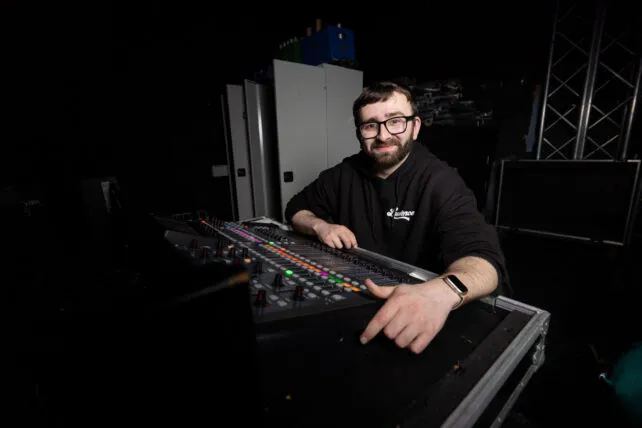
  • Sound Engineering & Mixing
  • Multimedia Promotions & Event Management
  • AV Studio & Live Events Production

Successful graduates of this programme are eligible to progress to the Level 8 BSc (Hons) Creative Broadcast & Film Production.

Additional Information

Similar Courses

TUS Limerick Creative Broadcast and Film Production Student

Course Type: Undergraduate

Creative Broadcast and Film Production – BSc (Hons)

Study Mode: Full Time

Level 8

Years 4

CAO points 307

Course Code US807

04.03.25TUS LSAD. Photo by Alan Place.

Course Type: Undergraduate

Music Production and Technology – BSc (Hons)

Study Mode: Full Time

Level 8

Years 4

CAO points 288

Course Code US808

04.03.25TUS LSAD. Photo by Alan Place.

Course Type: Undergraduate

Music Production and Technology – BSc

Study Mode: Full Time

Level 7

Years 3

CAO points 246

Course Code US703

TUS Clonmel Visual Effects for Film, TV and Animation Student

Course Type: Undergraduate

Visual Effects for Film, TV and Animation – BSc (Hons)

Study Mode: Full Time

Level 8

Years 4

CAO points 920 (Including Portfolio)

Course Code US810