




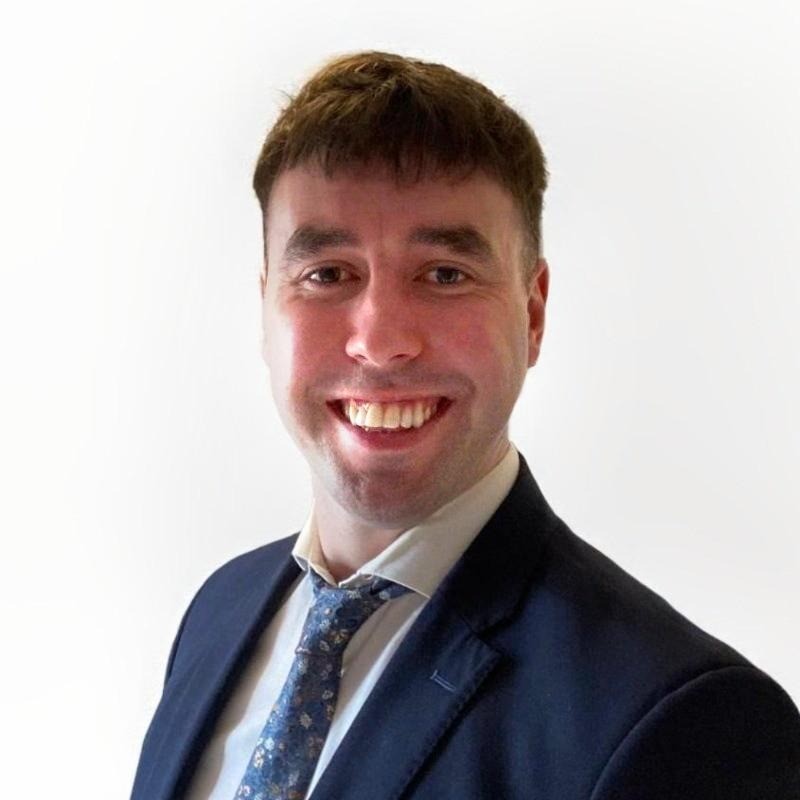
Name: Tommy O’Gorman
Course: MSc in Business Analytics
When I started the MSc in Business Analytics at TUS (Moylish campus), I wanted a practical, career-focused programme that would strengthen my ability to use data to solve real business problems and support better decision-making. The course gave me exactly that — a solid blend of analytics, strategy, modelling, and communication that I could apply directly in my day-to-day work.
During the programme, I was working at Flogas as the Pricing & Margin Manager and quickly saw the impact of what I was learning. Concepts covered in college on a Monday were often being applied in my role the very next day. I was also delighted to graduate with First Class Honours, finish top of my class, and receive the Award for Excellence.
More recently, I made the move to Chicago to take up a new role as a Pricing and Commercial Analyst with DCC Propane — an exciting step that built directly on the skills and confidence I developed during the MSc.
Why did I choose to study at TUS?
I chose TUS because the MSc is designed to be hands-on and industry relevant. It’s not just theory — it’s about learning the tools and techniques that companies actually use, and developing the mindset to turn analysis into action. The programme’s focus on real datasets, forecasting, optimisation, and storytelling with data really appealed to me.
What mode of study did I choose and why?
I studied while continuing to work, because I wanted to progress my career and apply what I was learning immediately. That combination worked brilliantly — I could bring real workplace challenges into the programme, and bring new methods and tools straight back into work. It helped me grow quickly, and ultimately supported my move into an international role.
What were the most difficult and most enjoyable aspects?
The toughest part was definitely pushing myself outside my comfort zone — especially at the start — and learning new technical skills like RStudio, SQL, and Tableau. But that was also the most rewarding part. Once those tools started to click, it opened up a whole new way of thinking about problems and communicating insights, which I now use every day and can’t imagine my working life without.
The most enjoyable part was seeing how everything connected: building models, interpreting results, and then presenting the story clearly so that decisions could be made with confidence.
What advice would I give to prospective postgraduate students/researchers?
My advice is simple: get stuck in from the start. Engage early, practise consistently, and don’t be afraid to make mistakes — that’s where the learning happens. The more you apply the tools to real problems, the faster you build confidence and momentum.