
Course Search

Course Search

Course Search

Music and Sound Engineering – BSc (Hons)

  • CAO Points: 297

  • Location: Athlone

  • years: 4


Course Overview

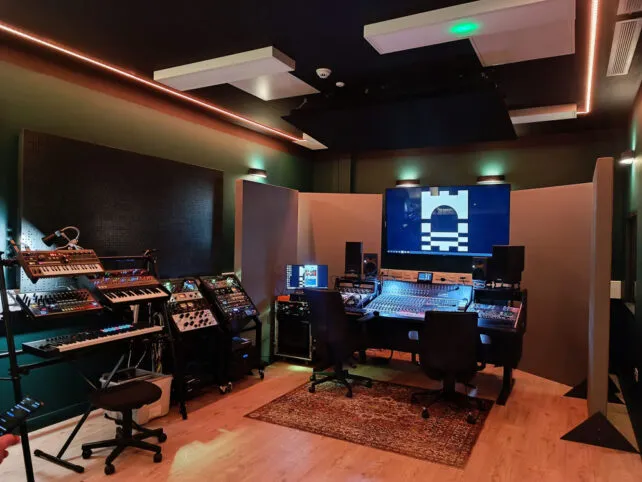
Work with industry standard software, computing, and studio and live audio equipment in a variety of dynamic, practical assignments at our state-of-the-art facilities. Gain vital creative industry exposure through multiple work experience modules. Manufacture a mandolin, an acoustic guitar, and acoustic treatments from raw materials at the wood workshop, as well as manufacturing microphones and virtual instruments. Study the core professional development concepts required to work in the creative industry including marketing, entrepreneurship and visual creation.

The Music and Sound Engineering course has been developed by TUS lecturing staff along with Creative Industry professionals to be the quintessential ‘Swiss army knife’ in this field of study. As a Music and Sound Engineering student, you will be involved in a wide range of industry-specific practical work across all aspects of Sound Engineering, Acoustic Technology, and other professional development studies that are necessities for working in the professional Creative Industry. This diversity gives graduates a range of real skills and the flexibility required to work in the Creative Industry, and on completion of the course, you will have assembled an impressive portfolio of industry-related work. Music and Sound Engineering students have unrivalled access to industry standard equipment and software in state-ofthe-art facilities based in one of Ireland’s most prestigious Technological Universities, right in the heart of Ireland. Being a musician is not a pre-requisite for entry to the course.

Contact Details

Niall O’Connor

Programme Co-ordinator

Email: Niall.OConnor@tus.ie

Dr. Shane Byrne

Programme Co-ordinator

Email: Shane.Byrne@tus.ie

What are the entry requirements?

Leaving Certificate

Grade H5 in two subjects, plus grade O6/H7 in four other subjects in the Leaving Certificate examination. Two of these subjects must be mathematics and a language (English or Irish). Note: An F2 in Foundation Level Mathematics will be accepted as meeting the minimum Mathematics requirement.

Further Education/Prior Learning Applicants

Applications will also be considered for Direct/Advanced Entry from those with a FETAC Level 5/6 qualification (or equivalent) and/or relevant prior learning. Click here to learn more.

Mature Applicants

Candidates applying as mature applicants may be required to attend an interview and may be requested to take an aptitude test to prove their suitability for a place on this programme.

International Applicants

International applicants should apply directly to the International Office at TUS, allowing plenty of time for completing the visa process. Applications for September start should be made by 1st June at the latest to ensure visas are processed in time. You should familiarise yourself with visa processing times for your country of origin to ensure you make a timely application. Find out more here.


Course Modules

  • Sound Engineering 1.1

    Credits: 10

    This module will provide an introduction to audio recording. It combines theory and practical elements to provide basic knowledge and skills to record in the studio environment. It has both a technical and creative focus that are essential to the sound engineer to produce quality audio.

  • Instrument Technology 1.1

    Credits: 5

    This module will introduce the student to equipment and processes in a workshop. The student will be instructed in the craft of instrument construction using wood. It will also teach best practice in a workshop environment, both from a functional and Health and Safety perspective.

  • Video and Animation Creation 1

    Credits: 5

    This module acknowledges the importance of video and animation creation in the professional Creative Industry. The module will develop the student’s technical and conceptual skills in video and animation.

  • Music and Instrument Appreciation 1

    Credits: 5

    This module will look at musical characteristics and instruments used in a number of styles of music. It will trace the development of music throughout history and will look at the key events that lead to evolution of genres and sub-genres. Musical form will be investigated to gain an understanding of key musical theory

  • Communications for Music and Sound Engineering 1

    Credits: 5

    The aim of this module is to provide students with the key skills, attitudes and competencies required of an undergraduate to ensure their success during their learning journey. Emphasis is placed on the person and on their personal identity, developing a sense of awareness of what it means to be an undergraduate student and a recognition of the need for lifelong learning.

  • Sound Engineering 1.2

    Credits: 10

    This module will build upon the work completed in the first semester. Through authentic studio projects, the student will have practical experience with creative and technical aspects of Sound Engineering.

  • Instrument Technology 1.2

    Credits: 10

    After an introduction to working with materials to construct basic classic structures with wood, this module will focus on the creation of a stringed musical instrument. The student will be instructed in the craft of instrument construction in weekly workshops held in the Solas, Athlone. It will also teach best practice in a workshop environment both from a functional and Health and Safety perspective.

  • Music and Production 1

    Credits: 5

    This module will develop critical listening skills and introduce basic compositional techniques. Students will be coached in the planning aspects of the recording process and will analyse the creative and technical elements involved in producing quality musical output.

  • Music Marketing 1

    Credits: 5

    Introduces the student to the principles, concepts and practice of contemporary marketing and how these apply to different business models in the professional Creative Industry. New business ideation will also be explored using the business model canvas.

  • Sound Engineering 2.1

    Credits: 5

    This module will build on the concepts and techniques covered in the Sound Engineering 1.2 module. This module has both theory and practical elements. It will encourage collaborative work to complete both technical and creative activities. Workflow in the module will be supported to ensure that planning and management aspects are implemented. As part of a collaborative project, Sound Engineering 2.1 students will be expected to organise and manage an event that includes live sound reinforcement. Where appropriate, this event can include participation from students on programmes such as: BA (Hons) in Animation and Illustration, BA (Hons) in Graphic and Digital Design, and Bachelor of Business (Hons) in Digital Marketing.

  • Instrument Technology 2.1

    Credits: 5

    This module will engage the students in the lifecycle of a stringed musical instrument from the concept stage. The student will be facilitated in interpreting plans, deciding on materials, material sourcing and on construction of their individual instrument components. This is an ongoing process and the instrument will be completed at the end of the Instrument Technology 2.2 module. At the start of this module, students will manufacture an electric guitar from a supplied kit to aid in the required skills in manufacturing an acoustic guitar.

  • Digital Audio 2

    Credits: 10

    This module will give an overview of the role of digital audio in modern music production. Students will explore digital signal processing, MIDI sequencing, audio sampling, and synthesis techniques through a range of software used in industry. The theoretical aspects of this module will be delivered and explored through creative context and practices.

  • Work Experience 2

    Credits: 10

    This is a self-directed module providing students with the opportunity to build their industry experience as part of their programme accreditation. Each student will identify and secure a placement(s) within areas of the professional Creative Industry in which they are interested. Programme staff can support the student by providing introductions to potential placement(s) providers. As part of the experience in the students chosen field, the module aims to develop each participant’s technical, communication, observation, and reflective abilities. Students may also choose to set up or partake in a civic engagement project within their local community.

  • Sound Engineering 2.2

    Credits: 10

    In this module students will be introduced to analog and computer based audio mixing, as well as aspects of Sound to Picture. There will be a focus on refining essential skills needed to produce quality audio and the student will take part in projects where they record, programme and synthesise sound, arrange music, mix and problem solve. Audio mix work and audiovisual work opportunities will be provided for students, the nature of which will encourage working creatively and collaboratively to develop and expand essential skills needed for the professional Creative Industry. Where appropriate, this collaboration could include students on the BA in Animation and Illustration programme.

  • Instrument Technology 2.2

    Credits: 10

    This module will engage the student in the lifecycle of a stringed musical instrument from assembly of the components made in Instrument Technology 2.1 through to finishing and setup for usage. The student will also be directed through instrument repair and maintenance issues.

  • Acoustics and Sound Perception 2

    Credits: 5

    This module aims to introduce concepts in acoustics which are required to understand psychoacoustics of hearing. The module will also focus on outlining the capabilities of the “normal” hearing auditory system and how they have influenced acoustical measurement and standards. Students will explore how these capabilities are affected by common hearing disorders and how they affect speech recognition.

  • Communications for Music and Sound Engineering 2

    Credits: 5

    The Communications for Music & Sound Engineering module will further develop students’ understanding of professional communication, as well as their technical skill set in respect to working with visual content, where students will create an online portfolio of their work that they will be able to maintain in future years of their studies and into their professional Events Industry career.

  • Sound Engineering 3.1

    Credits: 10

    The Sound Engineering 3.1 module will introduce the technical requirements of audio as well as production techniques required for broadcast. This module will push the learner to employ advanced recording and mixing techniques used in respect to broadcast. Where appropriate, Sound Engineering 3.1 students will collaborate with students from the Bachelor of Business (Hons) in Digital Marketing programme to create content for formative assessment(s).

  • Acoustic Technology 3

    Credits: 5

    Acoustic Technology 3 builds on the skills and techniques developed during the Instrument Technology modules, with a focus on how to apply these fabrication skills in different sound environments. Where appropriate, Acoustic Technology 3 students will be given a room in the Engineering and Informatics building on the TUS, Athlone Campus that may have acoustic response issues. Students will then have the opportunity to design, produce, and instal acoustic treatment for this room

  • Sound for Film and Television 3

    Credits: 5

    This module will explore a variety of supplementary key concepts in music technology and multimedia. It has a practical orientation that will see students work in authentic scenarios to experience work typical to the sound to picture industry. Students will work to develop a portfolio to aid them in their career and will develop their presentation skills to effectively communicate their ideas. It is intended that Sound for Film and Television 3 students will create an online folder that contains audio assets generated during assessment work that will be shared with students from the BA (Hons) in Animation and Illustration and B.Sc (Hons) in Software Design with Virtual Reality and Gaming programmes.

  • Audio Electronics 3.1

    Credits: 5

    This module introduces the candidates to engineering science and explains the concepts of instrumentation, heat, energy, waves and electrical principles in a Music and Sound Engineering context. It contains theoretical, practical and empirical material.

  • Work Placement 3

    Credits: 5

    This is a self-directed module providing students with the opportunity to build their industry experience as part of their programme accreditation. Each student will identify and secure one placement within areas of the professional Creative Industry in which they are interested. Programme staff can support the student by providing introductions to potential placement providers. As part of the placement in the students chosen field, the module aims to develop each participant’s technical, communication, observation, and reflective abilities. Students may also choose to set up or partake in a civic engagement project within their local community.

  • Sound Engineering 3.2

    Credits: 10

    Sound Engineering 3.2 will examine in-depth the key practical and theoretical concepts of the production of professional Popular Music and Electroacoustic Music, Sound Design and Audio Mixing.

  • Video Game Audio 3

    Credits: 5

    This module will explore the development of technology and emerging technologies that have facilitated the progression of Music and Sound Engineering in respect of the Video Game industry. It is intended that Video Game Audio students will create an online folder that contains audio assets generated during assessment work that will be shared with students from the BA (Hons) in Animation and Illustration and B.Sc (Hons) in Software Design with Virtual Reality and Gaming programmes.

  • Visual Creation 3

    Credits: 10

    This module is an exploration of the principles of image making with an emphasis on the moving image. Where appropriate, Visual Creation 3 students will collaborate with students from the BA in Graphic and Digital Design programme for formative assessment(s) over the duration of the module.

  • Audio Electronics 3.2

    Credits: 5

    This module introduces the candidates to engineering science and explains the concepts of instrumentation, heat, energy, waves and electrical principles in a Music and Sound Engineering context. It contains theoretical, practical and empirical material.

  • Sound Engineering 4

    Credits: 10

    This module is designed to have students critically analyse professional recordings and create a piece of music to the same standard in the recording studio, using the most up-to-date sound production techniques. Students on this module will also carry out live recording sessions to hone their sound engineering skills.

  • Audio Programming 4

    Credits: 5

    This module is designed to immerse students in audio coding. Students will create virtual instruments and processing units on coding platforms and learn how they can be used in cross-platform situations.

  • Interactive Audio 4

    Credits: 5

    This module will develop skill in circuit design and the use of microcontrollers to help students design and build novel interfaces for the creation of multimedia works.

  • Capstone Project Development 4

    Credits: 10

    Students on this module will investigate and implement research and project management techniques to develop a capstone project proposal document before undertaking the ‘Capstone Project’ module in semester 2. Students will have the opportunity to gain valuable professional Creative Industry placement and/or engagement at the start of this module, which should inform the student in the direction that the capstone project will proceed.

  • Audio Visual Composition 4

    Credits: 10

    This module will develop skills that will enable students to critically assess audiovisual work and provide them with the tools to create their own original audio visual compositions.

  • Working in the Creative Industry 4

    Credits: 10

    This module aims to equip learners with a comprehensive understanding of the professional landscape within the Live Events and Creative Industries. Emphasis is placed on essential competencies such as the operation of live audio equipment, principles of sound reinforcement, and the fundamentals of event management—skills that are critical to establishing a successful career in this sector. Students will be required to integrate theoretical knowledge acquired from related subject areas, including acoustics and audio electronics, and apply it within a practical, industry-relevant context. As part of the Working in the Creative Industry 4 module, learners will collaboratively plan, organise, and execute a live event incorporating sound reinforcement. Where appropriate, this project may involve interdisciplinary collaboration with students from complementary programmes, such as BA (Hons) Animation and Illustration, BA (Hons) Graphic and Digital Design, and Bachelor of Business (Hons) in Digital Marketing

  • Capstone Project 4

    Credits: 10

    This module follows on from the ‘Capstone Project Development’ module in semester 1. Students are tasked with implementing their capstone project while being supported by a supervisor(s). Supervision time per week is 20 minutes per student, i.e. 1 hour per 3 students.

What can you do after this programme?

On completion of the programme, you will have experienced the required practical and theoretical knowledge to be able to apply yourself to the positions:

Recording Studio Sound Engineer, Live Sound Engineer, Broadcast Sound Engineer for Radio & TV, Foley Artist, Audio Visual Technician, Video Game Audio Technician, Multi-Media Sound Designer, Instrument Manufacturer & Maintenance Technician, Creative Industry Entrepreneur, Acoustician, Event Coordinator, Audio Coding Developer, Audio Visual Artist, etc.

This is not an exhaustive list and graduates might find new niches and positions within the professional creative industry in which to work.

Successful graduates of this programme are eligible for Level 9 and 10 postgraduate programmes within TUS or elsewhere.

Additional Information

Similar Courses

TUS Athlone Music and Sound Engineering

Course Type: Undergraduate

Music and Sound Engineering – BSc

Study Mode: Full Time

Level 7

Years 3

CAO points 206

Course Code US704

Z207 Animation Studio_Athlone

Course Type: Undergraduate

Animation and Illustration – BA (Hons)

Study Mode: Full Time

Level 8

Years 4

CAO points 733 (Including Portfolio)

Course Code US802

TUS Athlone Graphic Design Students

Course Type: Undergraduate

Graphic Design – BA

Study Mode: Full Time

Level 7

Years 3

CAO points 830 (Including Portfolio)

Course Code US700

TUS Athlone Graphic and Digital Design

Course Type: Undergraduate

Graphic and Digital Design – BA (Hons)

Study Mode: Full Time

Level 8

Years 4

CAO points 839 (Including Portfolio)

Course Code US803