

Course Search

Course Search

Course Search

Agricultural Engineering – BEng

  • CAO Points: 311

  • Location: Moylish, Limerick City

  • years: 3


Course Overview

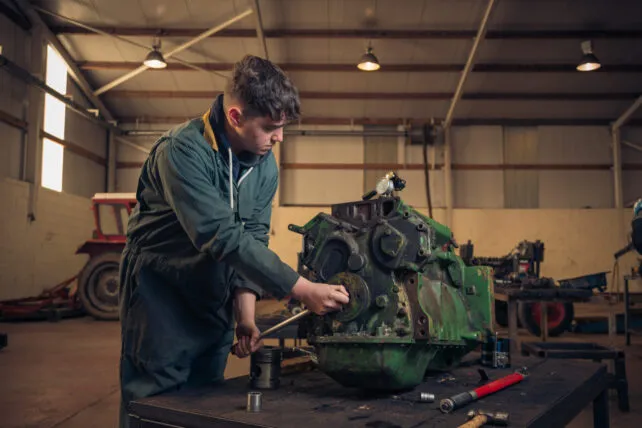
This course provides students with education and training to work within the area of Agricultural Technology. The focus of this course is firmly on the provision of skilled technicians for the farm machinery industry in Ireland. Course content includes tractor engineering and workshop process, machinery operation, electrical and electronic technology, administration and management, engineering science and mathematics, engineering drawing and CAD and computer studies, project and industrial placement together with a high degree of personal and practical skills. Students will be taught a mix of technology, practical, academic, administrative and managerial modules which will prepare them to carry out complex diagnostics and repairs of modern machinery and to be receptive to future technological developments to take advantage of vacancies that will arise within the industry.

The course has a high practical content with the inclusion of a 30-week work placement in approved training locations such as main garages, contractors and fabricators. Students will also have the opportunity to complete the work placement in the United States with large scale combine or forage crews. The placement will give students the job skills necessary for today’s employment market.

Successful graduates may also receive the Green Certificate in agriculture from Teagasc.

This course is run in conjunction with the Salesian Agricultural College, Pallaskenry, Co. Limerick. In Year 1, 4 days are delivered in Pallaskenry with 1 day attendance at TUS Moylish campus in Limerick. In Year 2, 3 days are delivered in Pallaskenry and 2 days in TUS. In Year 3, 2 days are delivered in Pallaskenry and 3 days in TUS.

NOTE: Salesian Agricultural College, Pallaskenry, Co Limerick (SACP) charge a separate additional fee to students on course US651 to cover the cost of Food, Materials (and if availed of Accommodation) at Pallaskenry. For details please contact SACP at 061 393100 or see: www.pallaskenry.com.

Contact Details

Niall Enright

Email: Niall.Enright@tus.ie

What are the entry requirements?

Leaving Certificate

A minimum of 5 O6/H7 grades in Leaving Certificate subjects, including Mathematics and English or Irish.

Mature Applicants

Candidates applying as mature applicants may be required to attend an interview and may be requested to take an aptitude test to prove their suitability for a place on this programme.

Level 6 Craft Certificate (Trade), National/Higher Certificate

Candidates who hold a Senior Trade Certificate and/or National Craft Certificate or holders of a National/Higher Certificate (Level 6) in Engineering or Technology may be considered for admission to Year 2 of this programme.

International Applicants

International applicants should apply directly to the International Office at TUS, allowing plenty of time for completing the visa process. Applications for September start should be made by 1st June at the latest to ensure visas are processed in time. You should familiarise yourself with visa processing times for your country of origin to ensure you make a timely application. Find out more here.

Please Note

Applicants are advised that those with a grade less than O4 in Ordinary Level Mathematics may have difficulty coping with the mathematics content of this programme.


Course Modules

  • Agricultural Engineering Science & Maths 1

    Credits: 10

    This module introduces the learner to the basics of engineering science and mathematics, and how to apply these to problems in the field of agricultural technology.

  • Introduction to Electrical & Electronic Technology

    Credits: 10

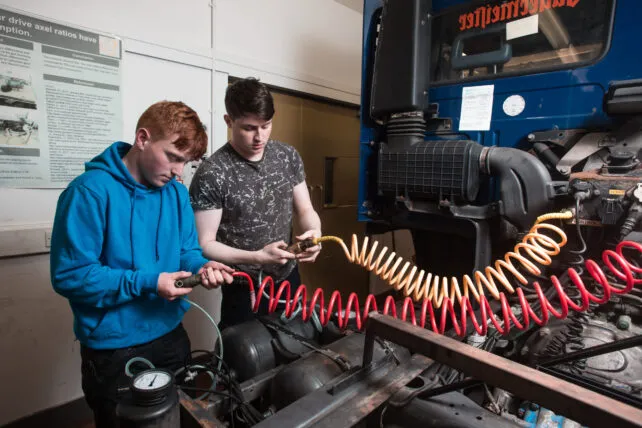
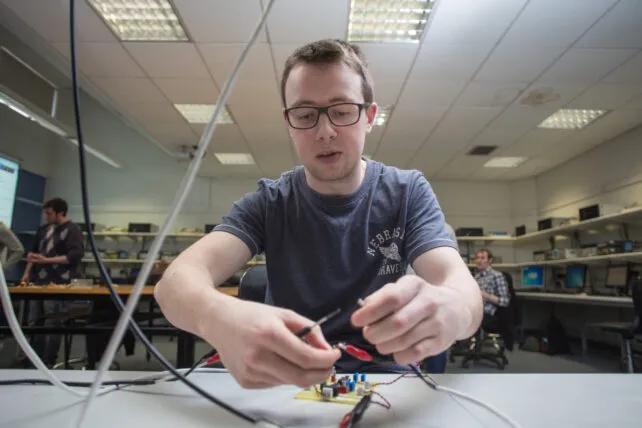
    The aim of this module is to introduce the learner to the basics of farm machinery electrics and electronics. Areas of study include the use of the multimeter, wiring circuits of agricultural machinery, testing and diagnostics of issues in wiring and electronic circuits.

  • Introduction to Tractor Engineering and Workshop Processes

    Credits: 15

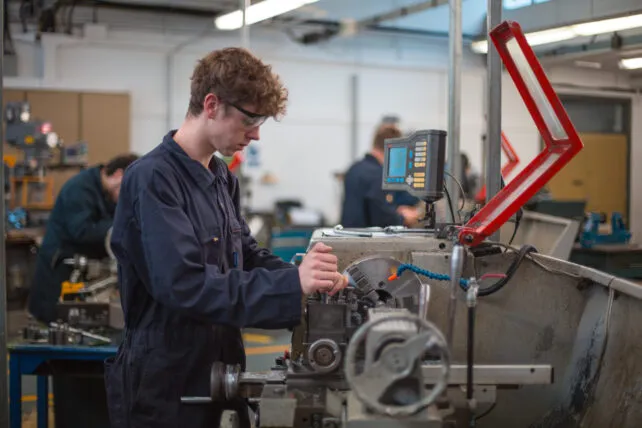
    The aim of this module is to introduce the learner to the basics of farm tractors and workshop repair processes for example diesel engines, hydraulics, brakes and transmissions and welding.

  • Machinery Operations

    Credits: 10

    The aim of this module is to introduce the learner to operation, setup and maintenance of agricultural equipment such as modern grass and forage equipment and tillage equipment.

  • Computer Applications including CAD

    Credits: 5

    In this module the students study engineering design and drawing. Also involved is commercial packages used in agriculture.

  • Project

    Credits: 10

    The focus in this module is to prepare the student for the working environment. This is achieved by the correct planning, organisation and repair or fabrication of equipment used by the agricultural industry. Projects are fabrication or repair based for example:

    Fabrication: log splitters, post driver and bale handlers

    Repair: Tractor engines, clutches, brakes, hydraulic, transmissions or machinery repair.

  • Industrial Placement

    Credits: 15

    Students complete 30 weeks work placement in agricultural dealerships/garages, fabricators, large contractors. Foreign placement is also available with large scale combine and forage harvesting crews.

    The placement will give students the opportunity to put into practice what they have learned in college.

  • Agricultural Engineering Science & Maths 2

    Credits: 5

    Introduce the learner to more advanced engineering science and mathematics.

  • Intermediate Electrical & Electronic Technology

    Credits: 10

    Introduce the learner to the complex electrics and electronics on farm machinery such as Isobus, CAN bus and sensor technology.

  • Intermediate Tractor Engineering

    Credits: 10

    This module introduces the learner to more complex aspects of the modern tractor such as modern engine features and modern tractor transmissions systems

  • Workshop Administration

    Credits: 5

    This module emphasises the management/business/administrative aspect of the Service Manager’s job. The module covers service department work-related areas such as Workshop Loading and Control, Workshop Efficiency and Productivity, Workshop Layout, Warranty Administration and Customer Service Process. The module also covers the work of the Dealer Principal, the Parts Sales and Vehicle Sales departments.

  • Business Management

    Credits: 5

    This module is designed to provide an overview to the theoretical and practical aspects of entrepreneurship and business management. Learners will gain a knowledge of and appreciation for the need to apply sound business techniques to managing a farm business. The module will also cover the issues involved in farm succession and inheritance.

  • Computing, Agricultural Engineering

    Credits: 5

    This module will help students understand some practical applications of computers in the Automotive, Transport and Agricultural Industry with particular regard to tractor and agricultural machinery dealerships, machinery dealerships, agricultural machinery manufacturers and agricultural contractors.

  • Agricultural Production

    Credits: 5

    The module give the students an overview of dairy and beef production systems in Ireland. It examines the issues relating to agricultural output such as qulaity assurance, crop production, animal health.

  • Engineering Mathematics 3

    Credits: 5

    Introduce the learner to more advanced engineering mathematics.

  • Hydraulics

    Credits: 5

    Develop the students understanding of fluid power through a grounding in Hydraulics.

  • Materials And Mechanics

    Credits: 5

    This module aims to improve the learners knowledge and understanding of materials and processes used by engineers. Learners will apply relevant mechanical equations to practical problems, components and case studies to enable them to select both correct materials and processes. Learners will understand how to quantify the environmental impact behind these choices Learning is enhanced with the use of a material selection software package, (Granta Edupack for example). Learners will analyse mechanical components that are exposed to complex loading.

  • Agricultural Cad And Design 1

    Credits: 5

    The use of computer aided design (CAD) systems in industry has become an essential part of the modern working environment. It is used at all stages of the design period, from conceptualisation and production of working drawings to the production of virtual reality images, prototypes, and final products. This unit aims to further candidates understanding of the CAD Parametric Modelling environment, in terms of hardware, software and physical surroundings, and the concepts of mechanical engineering design that accompany this environment. It will explore the typical composition of a CAD Parametric Modelling systems and Health and Safety matters that are associated with safe working practices.

    All elements of the module are predicated upon safety and ethical considerations. This module is structured to provide a balance of theoretical and practical experience through classroom, computer laboratory and workshop environments.

  • Agricultural Tractor Systems And Technology 1

    Credits: 5

    Introduce the learner to more complex aspects of the modern tractor.

  • Control And Diagnostics On Agricultural Tractors And Machines 1

    Credits: 5

    Introduce the learner to the complex electrics and electronics on farm machines.

  • Engineering Mathematics 4

    Credits: 5

    Introduce the learner to more advanced engineering mathematics.

  • Mobile Hydraulics

    Credits: 5

    Develop the students understanding of Mobile Hydraulics, and enable the student to understand the components and common types of circuit employed in this area.

  • Agricultural Cad And Design 2

    Credits: 5

    The use of computer aided design (CAD) systems in industry has become an essential part of the modern working environment. It is used at all stages of the design period, from conceptualisation and production of working drawings to the production of virtual reality images, prototypes, and final products. This unit aims to further candidates understanding of the CAD Parametric Modelling environment, in terms of hardware, software and physical surroundings, and the concepts of mechanical engineering design that accompany this environment. It will explore the typical composition of a CAD Parametric Modelling systems and Health and Safety matters that are associated with safe working practices.

    All elements of the module are predicated upon safety and ethical considerations. This module is structured to provide a balance of theoretical and practical experience through classroom, computer laboratory and workshop environments.

  • Agricultural Tractor Systems And Technology 2

    Credits: 5

    Introduce the learner to more complex aspects of the modern tractor.

  • Control And Diagnostics On Agricultural Tractors And Machines 2

    Credits: 5

    Introduce the learner to the complex electrics and electronics on farm machines.

  • Individual Project

    Credits: 5

    This module aims to develop the learner’s ability to apply their technical skills and knowledge to complete an individual technical project. There may be capacity for the individual project to focus on a pre-existing group project, where the focus of the project may be in such areas as characterisation and test of an assembly, product improvements, risk assessment or any other relevant topic agreed between learner and supervisor.

    This module also incorporates professional development, which aims to advance the learner’s transferrable skills, in order to prepare for employment. Transferrable skills such as project management and organisation, creative problem solving, technical writing and presentation skills are developed in this module.

What can you do after this programme?

Employment opportunities for graduates include Technical/Engineering Drafting, Field Technician, Service and Diagnostic Technician, Agricultural Engineering Manufacturing, Agricultural Engineering System Maintenance and Management, Agricultural Engineering Sales, Service, etc.

Graduates may continue on to suitable Level 8 Bachelor of Engineering/Science honours degree course in TUS such as Mechanical Engineering.

Additional Information

Similar Courses

TUS Agricultural Mechanisation Student

Course Type: Undergraduate

Agricultural Mechanisation – Higher Certificate in Engineering

Study Mode: Full Time

Level 6

Years 2

CAO points 257

Course Code US651

TUS Limerick Automotive Engineering and Transport Management Students

Course Type: Undergraduate

Automotive Engineering and Transport Management – BEng (Hons)

Study Mode: Full Time

Level 8

Years 4

CAO points 255

Course Code US915

TUS Limerick Mechanical Engineering Students

Course Type: Undergraduate

Mechanical Engineering – BEng (Hons) (Limerick)

Study Mode: Full Time

Level 8

Years 4

CAO points 337

Course Code US911

TUS Limerick Precision Engineering Student

Course Type: Undergraduate

Precision Engineering – BEng (Hons)

Study Mode: Full Time

Level 8

Years 4

CAO points 245

Course Code US914

TUS Limerick Engineering Technology Management Students

Course Type: Undergraduate

Engineering Technology Management – BEng (Hons)

Study Mode: Full Time

Level 8

Years 4

CAO points 329

Course Code US909