Courses
Admissions & Support

Course Search
Courses
Admissions & Support
Course Search
Our Services
Our Community
Course Search
Governance
Professional Services

Location: Blended
years: 2
Fees: NSLF funded for 2026. See Fees Section below
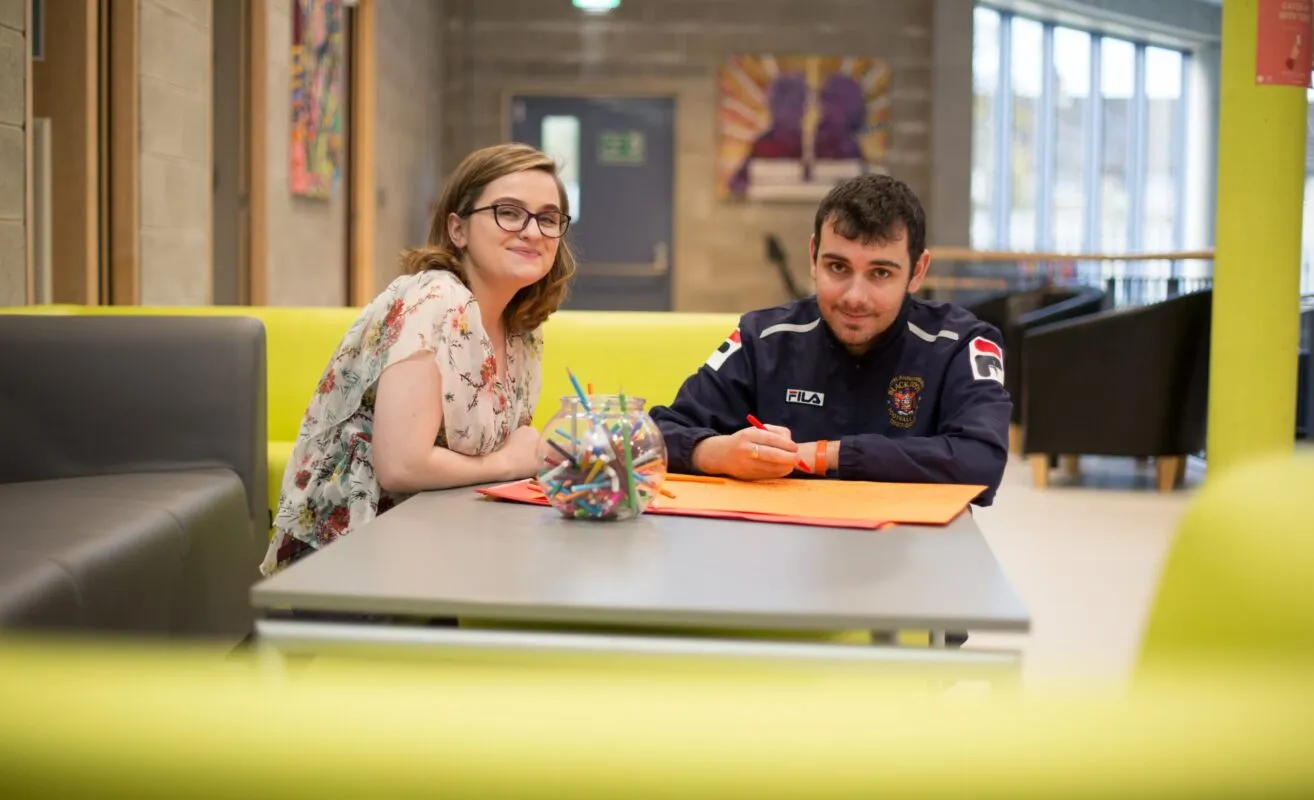
This two-year programme is aimed at staff currently working in the Early Childhood Education and Care sector who are looking to advance their careers by achieving a qualification at degree level. The programme aims to equip students with the knowledge, skills and competencies required to fulfill a variety of leadership roles within the Early Childhood Education and Care sector.
Year 2 Modules
Professional Practice Education Placement (1) (30 ECTS)
The aim of the module is to offer the learner the opportunities to acquire and develop the relevant knowledge, skills and values required of an emerging early years educator. Building on their professional development modules in Year One, learners will work independently under the guidance of a supervisor on their ability to assist in planning and providing for the care and education of a group of young children. They will use a range of teaching strategies and methodologies in planning and implementing curriculum, managing routines and transitions in everyday practice and assessing children’s learning and development. Learners will engage in reflection on teaching and learning, and working with parents, families and other professionals.
This supervised practice education placement is designed to facilitate the beginning stages of professional development of the learner.
The aims of this module are to introduce the learner to the early childhood sector and to the role of the early years educator through preparation for, and experience of, supervised work in early years services. This practice education placement enables learners to apply, link and appraise their theoretical knowledge in practice.
Attendance at a Pre-Placement workshop is a mandatory component in preparation for placement one and will be conducted prior to the commencement of placement.
Learning Through Drama And Storytelling In Early Years (5 ECTS)
This module will explore the use of drama, literature, and storytelling as an instrument for child development and engaging creativity through play. It will make use of drama techniques, children’s literature, the art of storytelling and puppetry in a collaborative approach encouraging learners to contribute to activities and develop suitable materials and activities for use in the early childhood environment. Links between these techniques and materials and theories of early childhood development (Piaget, Montessori, Vygotsky, Froebel) will be explored. Learners will also present practical sessions in these areas within class using their peers as participants to demonstrate their developing knowledge and skill development.
STEAM in ECE (5 ECTS)
STEAM is the acronym used to describe science, technology, engineering, arts, and mathematics. This module aims to empower early childhood education and care students with the knowledge, skills, and competencies to provide preschool children with authentic and meaningful STEAM experiences. As young children learn through play, exploration and discovery, students will explore ways of developing STEAM learning through play and inquiry-based experiences. These experiences will include both child and educator initiated activities. Throughout the module students will explore the essential role they as educators play in supporting children’s STEAM learning. Students will also expand their pedagogical content knowledge (Shulman, 1986) through practical experimentation, and critical evaluation of inquiry-based STEAM activities. Students’ digital literacy skills will be enhanced through the exploration of various technologies that can be used to enhance learning. Throughout the module students will be expected to identify direct links to the relevant themes, aims and learning goals within Aistear and the principles and standards within Síolta.
School Age Provision (5 ECTS)
The focus of the module is to outline the role of school age childcare within the Irish context. Working as School Age Childcare Practitioner requires similar skills , knowledge to early childhood care and education. This module allows the opportunity to cater specifically for the children aged 6- to 14 years of age. While exploring the relevant policy and practice to provide inviting, inclusive and participative play spaces.
Creating Inclusive Environments (5 ECTS)
The aim of this module is to introduce students to inclusive practice in the early years. Students will explore the historical and legislative/policy evolution from exclusion to inclusion. They will engage in reflective practice as they explore their values and beliefs about inclusion and examine the potential for implicit bias. The module will examine the term ‘additional needs’ and explore how children may have additional needs by virtue of their disability, family background, and ethnicity, physical and mental health. It will provide knowledge in relation to various strategies for providing an inclusive early years environment and programme/curriculum. Emphasis will also be placed on the critical importance of partnership with parents for understanding diversity and achieving an equitable implementation of inclusive practice.
Teaching and Learning through Play (5 ECTS)
This module introduces students to the concept and components of ‘playful teaching and learning’ in Early Childhood Education and Care. The module examines the notion of co-construction of play and engaging with children as active learners. The principles of PTL as well as the challenges are explored. Students will be enabled to develop an understanding of this co-constructed and open-ended process that ensures successful engagement. Students will reflect on their own attitudes to play and explore how this playful pedagogical approach enhances children’s thinking and learning.
Language And Literacy In Early Years (5 ECTS)
Creating the right learning environment for children is a very important aspect of developing their language & literacy skills. Children will seize opportunities to question, talk, solve problems, think, wonder, debate, argue and listen in an environment that is stimulating, challenging and supportive. (French, 2012). This module aims to provide a student with the knowledge, skill and competence to embed early childhood literacy concepts across a range of learning opportunities in Early Childhood Education & Care (ECEC) environments.
Year 3 Modules
Professional Practice Placement 2 (30 ECTS)
The aim of the module is to offer the learner advanced opportunities to enhance the relevant knowledge, skills and values required of an early years educator. Building on their professional development and practice modules in Years One and Two, as well as completing Practice Placement (1) learners will work independently under the guidance of a supervisor on their ability to assist in planning and providing for the care and education of a group of young children. They will use a range of teaching strategies and methodologies in planning and implementing curriculum, critically reflecting on one’s own professional practice as well as managing routines and transitions in everyday practice and assessing children’s learning and development. Learners will engage in reflection on teaching and learning, and working with parents, families and other professionals. This supervised practice education placement is designed to facilitate the advancing stages of professional development of the learner in terms of professional practice attributes (e.g., planning and developing a curriculum for children) and professional personal attributes (e.g., an ethical practice framework to inform their practice, the capacity for reflection and critical thinking).
Significant opportunities are in place for personal and professional development to support the development of reflective practice, problem solving, intentionality and critical thinking and the capacity to become practitioner researchers with a disposition for lifelong learning.
Therefore, this practice education placement enables learners to further apply, link and appraise their theoretical knowledge in practice. In this practice education placement, learners will complete documentation to evidence the knowledge, competence and skills development over the placement. In this second practice education placement, learners will also be expected to be proactively involved in the work of the agency.
During placement, learners will deepen their knowledge, skills and competence and build on the theoretical models covered in the previous semesters. In this second practice education placement, learners will also be expected to be proactively involved in the work of the early childhood setting.
The learning goals for the practice education placement are agreed between the learner, the practice educator and the college placement supervisor and are outlined clearly in a ‘placement contract’. Formal supervision meetings between the learner and the practice educator will take place at least once every two weeks in order to offer support, guidance and feedback to the learner on placement performance.
Attendance at a pre-placement induction workshops is mandatory. Non-attendance will result in a failed element of your overall portfolio grade.
Reflective Educator (5 ECTS)
This module explores the values and principles that underpin the identity of professional early year’s practitioners and encourages learners to contribute and value their own shared community of practice.
Learners will develop an ability to reflect on their own personal and professional learning over the course of their first practice placement and will allow them to develop an awareness of their personal values and how these may advance and influence self and others in their second placement.
An explicit focus on advancement of knowledge and skills of practice education placement is integral to this module and should be demonstrated within final assessment submission or end of module interview with lecturer.
Aistears principle on relevant and meaningful experiences links very clearly to the adults ability to reflect on practice, providing a framework for them to improve in areas identified.
Supporting Children With Additional Learning Needs (10 ECTS)
Since the advent of the Free preschool Year in early childhood education and care over 95% of children aged between 3 and 5 years attend an early childhood setting (Pobal, 2019). Early childhood educators frequently encounter children with additional learning needs due to a disability. Therefore, educators need the requisite knowledge, skills, and competencies to support these children effectively. Such support aims to enable all children to meaningfully participate in the curriculum. This module will explore a variety of learning difficulties and disabilities that affect young children’s physical, cognitive, language, social or emotional development. It will also review the relevant legislative and policy context of inclusive practice from an Irish and international perspective. Furthermore, the importance of effective partnership with parents and other professional agencies will be examined.
Management In Early Years Settings (5 ECTS)
Within this module students will gain an understanding on the key roles and responsibilities of an early years manager. They will examine the theoretical perspectives pertaining to management in early years provision and critically examine the concepts and systems that link to quality in early years provision. Students will have opportunities to evaluate their own strengths and evaluate both National and International models of management in early years.
Legal Frameworks & Governance (5 ECTS)
This module designed to develop awareness and increase a learner’s knowledge of accountability and accountable practice within the legal, professional and ethical frameworks pertinent to a professional early years practice. In addition, the module will encourage you to reflect upon your personal and professional abilities and boundaries and consider the importance of the multi-professional team.
This module explores the concept of children’s rights in law and policy and how these apply in a variety of settings. Legal and policy documents such as the United Nations Convention on the Rights of the Child (UNCRC) and the Children Act, aimed at promoting children’s rights are debated. Philosophical issues around ‘rights talk’ and ‘can children have rights’ are discussed in the context of young citizens, best interests, paramountcy and childhood as social construct, alongside other topical issues.
Health, Nutrition & Wellbeing (5 ECTS)
This module enables the learner to explore and identify optimum nutrition for children and will enable the learner to deepen their knowledge of holistic development within the early years. The module will enhance a learner’s understanding of the factors that prevent and support all children in maintaining an adequate diet. Current issues regarding the nutrition of children such as obesity and will also be explored. Learners will also consider requirements and the conditions that will ensure young children flourish in settings and at home. An exploration of the implications of policy, local initiatives and current issues related to children’s health and well-being while considering the inequalities and challenges to the welfare of families with young children. A review of emerging tensions in the wake of the Covid-19 pandemic and other contemporary issues relating to the health and wellbeing of young children and families will be explored. This module will consider concepts of health and well-being in infancy and early childhood and the multiple factors that contribute to a child’s welfare. The impact of ill health and disability on early learning and on families will be considered and the individual, socio-cultural and environmental aspects of well-being for young children and their families will be examined. The module will consider providing for young children’s well-being and protection as part of a continuum of best practice and the position of health promotion within the early childhood curriculum will be explored. Learners will examine the early year’s educator’s role in promoting healthy choices and in the identification and protection of babies and young children from neglect and abuse. Learners will become acquainted with current health promotion and child protection policies and legislation and with the range of health and welfare services that exist for children and families in need of support.
Applicants must hold a QQI Level 6 (or equivalent) qualification which is recognised by the Department of Children and Youth Affairs (DCYA) as meeting the criteria for ‘ECCE Room Leader (Standard Capitation)’.
To qualify for advanced entry into Year 2, applicants must present the full Level 6 QQI/FET (FETAC) award in Early Childhood Care and Education (6M2007) with three distinctions, including one distinction in 6N1946 Work Experience or 6N1947 Work Practice. Successful applicants will receive exemptions from Year 1 modules totalling 60 ECTS based on prior certified learning.
Information on qualifications that meet the criteria is available at:
gov.ie – Early Years Recognised Qualifications (www.gov.ie)
Applicants must also be currently employed within the Early Childhood Education and Care sector and remain employed for the duration of the programme. Students are required to complete 400 hours of professional practice across Years 1 and 2. A signed letter of verification from their employer is required.
Applications will be assessed on a first‑come, first‑served basis, with priority given to applicants who meet the minimum entry requirements.
or
Recognised Prior Learning (RPL) – Assessment
Please review the academic entry requirements for this programme.
If you do not hold these academic qualifications but would like your application assessed under RPL please select YES on the online application form and Flexible Learning will be in contact.
ENGLISH LANGUAGE: Applicants who do not have English as their first language must ensure they satisfy English Language requirements. For entry to undergraduate courses, a score of 5.5 in an IELTS or equivalent exam is required. For postgraduate courses, a score of 6.0 in an IELTS or equivalent exam is required. It is the responsibility of the applicant to ensure their English proficiency meets these requirements.
The programme will run for two academic years in a blended learning format (a mixture of online and on-campus delivery) as follows;
Year 1
Online classes 2 evenings per week, 2 hours per evening
Mondays & Wednesdays from 7-9pm
Year 1 Induction (in-person) will take place at TUS Thurles campus on Saturday 12th September 2026 from 9:30m to 4:30pm.
Three in-person Saturday classes in Semesters 1 & 2 at TUS Moylish Campus, Limerick from 9:30am – 4:30pm (dates to be confirmed).
Start Date
There will be an online welcome session for all students on 9th September 2026.
Year 1 Induction (in-person) will take place at TUS Thurles campus on Saturday 12th September 2026 from 9:30m to 4:30pm.
Online classes will commence on Monday 14th September.
Location
Classes will take place online and at TUS Thurles Campus (Induction) and TUS Moylish (Limerick) Campus.
The proposed delivery schedule is subject to change.
Each 5 credits will normally equate to approximately 100 Total Learning Hours. Total Learning Hours includes the time you spend in class (lectures, tutorials, practical elements) and the time you spend completing work outside of college. The balance between these two varies by discipline, and by level of study. You should bear in mind that the workload will increase at particular times e.g. when assignments are due.
The assessment strategy for this programme includes both formative and summative elements including: written assignments, projects, portfolios, skills demonstration and examination.
Professional practice placement is a core requirement and can be completed in the participant’s existing place of employment.
Bachelor of Arts in Early Childhood Education and Care (Level 7, 180 ECTS)
The programme fee is €4,800 (€2,400 per academic year).
This programme is eligible for 80% funding under the Nurturing Skills Learner Fund (NSLF).
Applications to NSLF must be submitted to them by 1 May 2026.
Click here Nurturing Skills Learner Fund for full NSLF details, including Eligibility Criteria and Application Process.
Application deadline for Nurturing Skills Learner Fund is 1st May 2026.
Applications for this L7 programme will close 2 weeks before the listed start date or once the maximum number of applicants is reached.
Places are allocated on a first come first served basis.
Programmes run subject to viable numbers.
General Queries
Flexible Learning Office
Email: flexible.midwest@tus.ie
Telephone: (061) 293802
Academic Queries
Aoife Prendergast
Email: Aoife.Prendergast@tus.ie
Join the TUS Flexible Learning Community
Click here