
Course Search

Course Search

Course Search

Graphic and Digital Design – BA (Hons)

  • CAO Points: 839 (Including Portfolio)

  • Location: Athlone

  • years: 4


Course Overview

As one of the top graphic design courses in Ireland, the BA (Honours) in Graphic and Digital Design will provide you with a unique and exciting educational experience while learning to become a designer. Built on a legacy of over 40 years of art and design, your creative talents will be nurtured by a team of lecturers who are passionate about their field. You will receive one-to-one tuition from staff who want your experience to be the best and who understand that design learning must be tailored to the student’s distinctive, creative flair and interests. You will be encouraged to follow your passion and to develop your design process through research and experimentation. At the same time, you will be exposed to a host of new, exciting disciplines and skills that will enhance your critical and theoretical thinking to help you advance as a conceptual and strategic graphic designer. Over your design education journey, supported by committed staff, you will grow into a designer with broad knowledge and an informed world view, who can deconstruct communication problems, conceptualise and execute resolutions, and who can articulate and confidently present your creative work. You will have access to staff members with a wide-ranging body of knowledge and experience in both visual communications and fine art practice, both at national and international levels. You are guaranteed one-to-one learner/ lecturer interactivity in a purpose-built environment with your own personal studio space and excellent production facilities.

Additional Information

Graphic Design Portfolio Requirement.

Contents and inspiration for your portfolio can come from many sources including for example, Leaving Certificate subjects such as Art, Music, Design & Communication Graphics, Technology, Construction Studies, Engineering, Computer Science and Home Economics. Portfolio work can consist of projects you completed in Secondary School or on a PLC and which you have recorded via photographs or video. Not all the work needs to come from an educational setting. There is no formula for a portfolio it is as individual as the person putting it together. However, we will ask you to be selective and limit it to 20 pieces. So, select the work that you feel best about and that you think represents your creativity/skillset best.

Applicants can choose to be assessed via one of the following options:

  1. For assessment, we ask each applicant to be selective and limit their submission to a maximum of 20 of their best pieces. The work can be individual or related pieces and should represent the best skills of the applicant. If the applicant’s strengths are in problem solving, they may submit research/visual development as one of the three. Again, work submitted should reflect the strengths and personality of the applicant; be that in illustration, painting, print, typography, photography, graphic design, film or showcase the visual development/research of your work. Please see link enclosed to find about more about the portfolio https://tus.ie/LSAD/portfolio/. The LSAD portfolio portal will be open from March 13th to March 27th. All CAO applicants will receive an email with full details & instructions, so keep an eye on your inbox. We’re really looking forward to seeing your work. 

Or alternatively:

  1. Applicants may choose to participate in an applied project, which will be carried out remotely/ electronically in March 2026. Applicants who choose the applied project option will be issued with the project brief, and staff will guide them in the process through workshops and live advice online. The resultant project will subsequently be assessed.


Contact Details

Tara Cullen

Email: Tara.Cullen@tus.ie

What are the entry requirements?

Leaving Certificate

Grade H5 in two subjects, plus Grade O6/H7 in four other subjects in the Leaving Certificate examination. Two of these subjects must be Mathematics and a language (English or Irish). Note: An F2 in Foundation Level Mathematics will be accepted as meeting the minimum Mathematics requirement. *For all applicants, portfolio presentation is required.

QQI

Level 5 award including a distinction grade in at least three modules.

Mature Applicants

Mature applicants are not required to meet minimum entry requirements. For all mature applicants, portfolio presentation and interview is required.

International Applicants

International applicants should apply directly to the International Office at TUS, allowing plenty of time for completing the visa process. Applications for September start should be made by 1st June at the latest to ensure visas are processed in time. You should familiarise yourself with visa processing times for your country of origin to ensure you make a timely application. Find out more here.

Course Modules

  • DESIGN: Foundation

    Credits: 10

    This module aims to provide learners with a foundational understanding of design. Learners will be introduced to the fundamental principles of design. They will be challenged to adopt a creative, analytical and reflective mindset which is evident in the distinct phases of the design process (define problem, research, ideation, develop/iterate, refine, deliver). Fearless experimentation with new experiences, techniques and technology will aid the development of this foundational understanding of design. Work will be orientated around exploring our fundamental elements; pattern, space, shape, form, scale, proportion, direction, rhythm, orientation, light and tone. Learners will be instructed in the use of appropriate software to further explore this work digitally.

  • IMAGE: Illustration and Photography 1.1

    Credits: 10

    This module is an introduction to photography and illustration with an emphasis on creative problem investigation in an integrated design communications environment.

  • STUDIO PRACTICE: Confidence

    Credits: 5

    This module is an introduction to photography and illustration with an emphasis on creative problem investigation in an integrated design communications environment.

  • VISUAL CULTURE 1.1 : Image-Text an Intro

    Credits: 5

    This module aims to introduce the learner to key developments and movements in art and visual communications and develops their understanding of cultural, social and historical contexts in which the practice of art and design has evolved and, importantly, how it is essential to their studio practice. It fosters in the learner an understanding of the origins and development of visual language from pictographs and letterforms to typographic canons. In addition, it provides the learner with the knowledge and understanding of the referencing system used for the writing of visual culture essays.

  • DESIGN: Exploration

    Credits: 10

    This module aims to introduce learners to the working practices and views of leading graphic designers. Creative thinking is expanded through developing understanding of the design process, exploring typographic expression and the relationships between word and image. Learners will also be encouraged to explore less conventional approaches to generating solutions and to that end they will be expected to continuously engage in self-lead basic research activity, producing graphic annotations based on their everyday observations and experiences. Ongoing technology instruction will aid the development of their design practice and presentation skills will be further honed by submitting work for review by final year students.

  • IMAGE: Illustration and Photography 1.2

    Credits: 10

    This module aims to expand the learners knowledge and skills of processes in illustration and photography. The emphasis is on more advanced practical and creative applications within an integrated design communications environment.

  • STUDIO PRACTICE: Voice

    Credits: 5

    This module aims to develop a professional approach in executing design projects in terms of design process, communication skills and technical competencies. It advances the knowledge, skills and competencies acquired in STUDIO PRACTICE: Confidence in Semester 1. The learner is tasked with the design of a portfolio of work which captures the ‘design voice’ of the individual; effectively
    communicating their aptitude and strengths.

  • VISUAL CULTURE 1.2 : 19th Century Design & Technology

    Credits: 5

    This module aims to introduce the student to key developments and movements in art and visual communications and develops their understanding of cultural, social and historical contexts in which the practice of art and design has further evolved and, importantly, how it is essential to their studio practice. It fosters in the learner an understanding of developments that have occurred in technology and design from printing methods and photography to the zeotrope and early twentieth century design. In addition, it develops the students essay writing skills and provides them with a knowledge and understanding of research and essay structure methods imperative for the writing of visual culture essays.

  • DESIGN: Visual Thinking

    Credits: 10

    This module provides an understanding of visual thinking in the context of communication design. The focus is on developing the student designer as strategic communicator, examining and integrating skills across creative and critical thinking, audience awareness, ideation, message generation and communication outputs. Students are encouraged to formulate their own design views and to explore and develop their particular strengths, be they typographic, illustrative or photographic.

  • IMAGE: Creation & Animation

    Credits: 10

    This module is an exploration of the principles of image making with an emphasis on animation and time-based media.

  • STUDIO PRACTICE: Profile

    Credits: 5

    This module aims to develop the learner’s awareness of industry standard practice through the design and production of a creative
    professional profile. The learner’s self-awareness and confidence is fostered through building their individual design profile and story. Students will develop creative, communicative, technical and practical skills required for effective progression within the design profession.

  • VISUAL CULTURE 2.1 : Modernism

    Credits: 5

    This module aims to provide the student with a deepened understanding of major developments in visual communications and technology during the 20th century. Focus is given to the cultivation of ideas in art and design and will explore the common themes and cross-fertilizations that occur between theory and culture. It examines the legacy of Modernism and it’s influence on contemporary graphic design. It also seeks to develop the students sensitivity to critical thinking and their competence to articulate ideas in design and visual culture through discussions and seminars and through oral and written communication.

  • DESIGN: Typography & Meaning

    Credits: 10

    This module encourages students to explore typographic function and expression to communicate meaning and message. Emphasis is on the role of typography in design and on developing typographic treatments appropriate to their creative concepts for briefs. Students will be expected to further develop their capabilities to explore varying forms of expression to create powerful, engaging and content appropriate design.

  • IMAGE: The Moving Image

    Credits: 10

    This module is an exploration of the principles of image making with an emphasis on the moving image. The learner is introduced to practical processes involved in time-based audio/visual media production with an emphasis on visual and graphic language. Through the completion of analytical, creative, and technical exercises the learner is enabled to achieve effective solutions to moving image design challenges.

  • STUDIO PRACTICE: Presentation

    Credits: 5

    This module enhances learner awareness of professional practice through the design and production of a showcase presentation of their creative work. Students will develop creative digital, communicative, technical and practical skills required for effective self promotion within the design industry. This in turn will assist them both in securing work placement and in advancing their skills in readiness for employment/placement.

  • VISUAL CULTURE 2.2 : Post Modernism

    Credits: 5

    This module aims to provide the learner with a cognisant understanding of major developments in visual communications and technology during the 20th century. Focus is given to the cultivation of ideas in art and design and will critically examine the common themes and crossfertilisation that occur between theory and culture. It will afford the learner the capacity to appraise the work of artists and designers in the context of historical, cultural and theoretical precedents. It will examine visual communications encompassing aspects such as typographic expressionism and branding design from the mid 20th Century to semiotics and Postmodernism, and it’s relationship to contemporary design. It will also further develop the learner’s competence to articulate ideas and critically analyse design and visual culture through written communication.

  • DESIGN: Creative Direction

    Credits: 10

    Under the guidance of the lecturers, students in the final year of the course will become both designer and creative director. The studio work in year 3 compounds the learning from previous years, empowering the student to lead, direct, design, present and deliver a complete project over a spectrum of design communications. The design brief must be influenced by external factors, undertake simulated and /or real-life projects and cover current topics. This allows the student to experiment freely within the recognised structures of the discipline, using selfinitiated elements that will create unique but marketable design work & this type of project enables the student to develop their technical skill and use the Adobe suite as a cohesive whole.

  • IMAGE: Visual Narrative

    Credits: 5

    This module is concerned with the development of image-based narratives required to communicate an idea or story.

  • STUDIO PRACTICE: Placement

    Credits: 10

    This module aims to provide learners with the experience of working in an industry environment and the opportunity to acquire and develop knowledge and professional values in the context of client-driven requirements. The learner will be introduced to the professional skills, competencies and knowledge required by design professionals to work effectively within industry.

  • VISUAL CULTURE 3.1 : Themes & Theory

    Credits: 5

    This module will examine themes and issues relating to contemporary design and visual culture within a theoretical context. It seeks to foster in the learners the ability to source and research relevant information on design related topics. It will also enhance the learners competence to engage in the discourse of visual communications through debates and presentations and will further develop their competence to articulate ideas in design and visual culture through oral and written communication.

  • DESIGN: Final Project

    Credits: 10

    Through previous learning the student is required to demonstrate their analytical and in-depth creative skills by researching, developing and resolving a major body of design work. The student will also expand their technical skills and become more competent in the use of industry standard software.The Final Project should enhance the students’ individual skills, while refining their abilities in one or more of the following areas: graphic design; typography; branding; digital media.

  • IMAGE: Type in Motion

    Credits: 5

    This module builds on the learning from previous modules and allows the student to combine and develop their typographic, visual and storytelling skills across a digital platform. Students will learn to animate meaningful typographic compositions that demonstrate clear, compelling storytelling for on-screen environments and motion graphics in a critically engaged and informed manner. The student will also expand the necessary creative and technical skills required to produce motion graphics.

  • STUDIO PRACTICE: Promotion

    Credits: 10

    This module aims to build on the knowledge, skills and awareness acquired in years 1 and 2 of Studio Practice and Design. The module will authorise the learner to find their unique design voice, allowing them to expand their design process and portfolio while discovering new ways to document and visualise how they work. Students will further develop the design, communication and technical skills necessary for effective self-promotion, through the practice of creative print and digital strategies.

  • VISUAL CULTURE 3.2 : Critical Perspectives

    Credits: 5

    This module will continue to examine themes and issues relating to contemporary design and visual culture within a theoretical context. In consultation with the tutor the learner will initiate and develop an individual research design topic, identify and evaluate critical literature appropriate to area of study. The culmination of the Visual Culture modules of the course will provide the student with the opportunity to utilise their analytical skills to further contextualise various aspects of design and visual theory in the realisation of an in-depth Literature Review on a particular design related topic. This will enable them to research, synthesise and critically analyse information in written format.

  • Design for Time Based Media 4

    Credits: 10

    Students will draw on their knowledge of static bitmap and vector graphics, established 2D/3D animation, sound and video elements and combine their skills in video editing and special effects production to create visually dynamic and dynamic videos. They will have unique media skills in Time-Based Media, and will be matched by interdisciplinary competence in Time-Based Media. They will take a reflective approach to their work as designers or communicators in business or community settings. Additionally, students develop an understanding of design practices in storyboarding and scripting, motion graphics, audio, video, and AR (augmented reality). Their knowledge of the professional realities of the contemporary design industry will enable them to respond imaginative, access to a wider range of professional opportunities that will be available to them upon completion of their degree.

  • Studio Practice : Live Client Project 4

    Credits: 10

    This module provides students with the opportunity to engage in ‘real world’ live design projects and to build on the practical and creative skills necessary to deliver strategic design consultancy.

  • Visual Culture 4.1 : Theory to Practice 4

    Credits: 10

    The Theory to Practice module combines design theory and visual culture with design practice from within the studio. This is based upon the design department’s foundational premise that design production is intrinsically informed by visual culture and historical reflection and inherently underpinned by critical and theoretical thinking.

  • Visual Culture 4.2 : Theory to Showcase 4

    Credits: 10

    The Theory to Showcase module is a continuation of the Theory to Practice module. It combines design theory and visual culture with design practice from within the studio. As per the previous semester the design department’s foundational premise is that design production is inherently underpinned by critical and theoretical thinking as well as being intrinsically informed by visual culture and historical reflection.

  • Design: Interaction & Experience 4

    Credits: 10

    This module helps the learner to mix theoretical and practical considerations with exercises in user-centred research, contextual ideation, sketching, narrative, storyboarding, scriptwriting, process/flow design, wire-framing, data visualisation, graphic design, UI (User Interface) & UX (User Experience) design methodologies.

  • Design : Final Project 4

    Credits: 10

    This module provides students with the opportunity to initiate, develop, resolve and bring to fruition a major body of creative and self-directed design work. The project is negotiated and agreed with the Year 4 lecturing team and may be carried out in collaboration with an external client or organisation. Projects may be initiated on the basis of a design discipline of particular interest to the student or it may encompass a subject area the student feels passionate about exploring creatively and visually across different platforms.

What can you do after this programme?

Graduates enjoy excellent employment prospects in Ireland and overseas, and are employed in graphic design for both print and screen, advertising agencies, publishing houses, printing, the arts, the film and television industries and in teaching roles in second, PLC and third level courses.

Successful graduates of this programme are eligible for Level 9 and 10 postgraduate programmes within TUS or elsewhere.

Student Testimonials

Táine King

Additional Information

Similar Courses

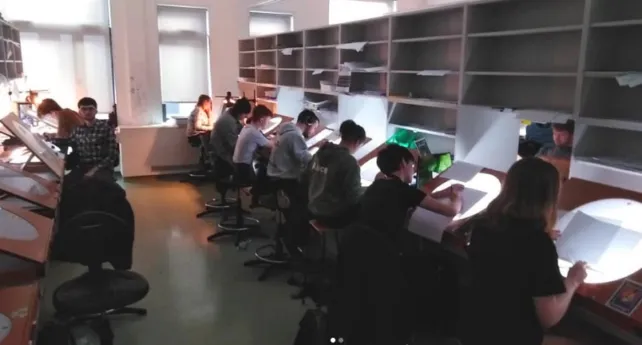
Z207 Animation Studio_Athlone

Course Type: Undergraduate

Animation and Illustration – BA (Hons)

Study Mode: Full Time

Level 8

Years 4

CAO points 733 (Including Portfolio)

Course Code US802

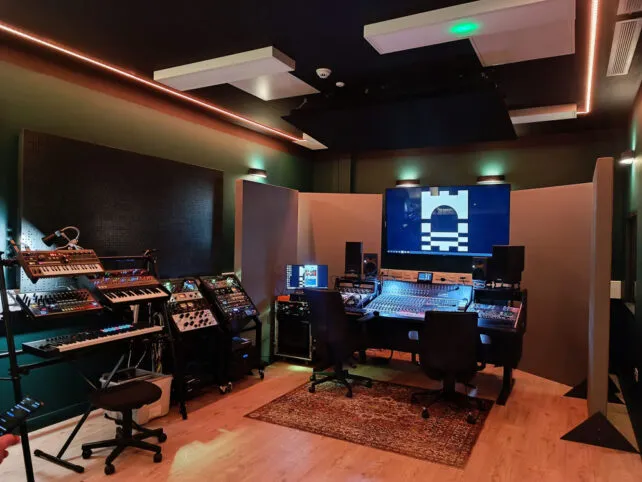
TUS Athlone Music and Sound Engineering

Course Type: Undergraduate

Music and Sound Engineering – BSc (Hons)

Study Mode: Full Time

Level 8

Years 4

CAO points 297

Course Code US809

TUS Athlone Graphic Design Students

Course Type: Undergraduate

Graphic Design – BA

Study Mode: Full Time

Level 7

Years 3

CAO points 830 (Including Portfolio)

Course Code US700